

Business Operation · 2025
In this section22 topics
- Corporate Information4 items
- Dividend Policy2 items
- Major Shareholders2 items
- Business Strategies Overview6 items
- Material Changes & Developments1 item
- Use of Proceeds from Securities Offerings3 items
- Commitments Made in the Registration Statement2 items
- Group Operating-Structure Policy1 item
- Companies Where the Company Holds ≥10%1 item
- Shareholders with Potential Conflict of Interest1 item
- Relationships Among Major Shareholders1 item
- Shareholders' Agreement1 item
- Shareholding Diagram (Group Structure)3 items
- Income Structure3 items
- Product / Service Characteristics2 items
- Research & Development6 items
- Assets Used in the Business5 items
- Marketing Policy & Competition2 items
- Procurement of Products & Services8 items
- Projects Under Construction1 item
- Debentures & Bills of Exchange2 items
- Convertible Securities2 items
Corporate Information
Company Name
THAI RUBBER LATEX GROUP PUBLIC COMPANY LIMITED
Telephone
0-2033-2333
Website
www.thaitex.com
info@thaitex.com
Dividend Policy
Dividend Policy
Thai Rubber Latex Group Public Company Limited has a dividend payment policy that depends on the operating performance of the business at a rate of not less than 1/3 of the net profit for the year after accumulated deficit (if any) according to the Company's Articles of Association. For legal reserves, an allocation of not less than 5% of the net profit from the separate financial statements will be made.
Historical Dividend Payments
| This Year | Last Year | 2 Years Ago | 3 Years Ago | 4 Years Ago | Metric | Description | Remark |
|---|---|---|---|---|---|---|---|
| -0.22 | -0.27 | -0.44 | 0.32 | 0.84 | Net profit per share (Baht : Share) | Net profit per share (baht : share) | EPS |
| 0 | 0 | 0 | 0.12 | 0.15 | Dividend per share (Baht : Share) | Dividend per share (baht : share) | |
| 0 | 0 | 0 | 0 | 0 | Dividend stock ratio (Number of original shares: dividend shares) | Ratio of stock dividend payment (existing share : stock dividend) | |
| 0 | 0 | 0 | 0 | 0 | Dividend share value per share (Baht : Share) | Value of stock dividend per share (baht : share) | |
| 0 | 0 | 0 | 98.13 | 122.67 | Total dividend payment value (Baht : Share) | Total dividend payment (baht : share) | Total dividend payment (million baht) |
| 0 | 0 | 0 | 0.23 | 0 | Dividend payout ratio to net profit (%) | Dividend payout ratio compared to net profit (%) | Dividend Payout Ratio |
Business Strategies Overview
Chairman's Message
In 2025, the global business environment continues to face rapid changes driven by economic, social, technological, environmental, and evolving consumer behavior factors. THAITEX remains firmly committed to continuously enhancing and strengthening its organizational capabilities to maintain competitiveness and effectively respond to the challenges of the modern business landscape.
In terms of sustainability, the Company places strong emphasis on research and development of environmentally friendly products to reduce adverse impacts on the ecosystem while meeting the demands of today’s markets. We also promote the use of renewable energy alongside efficient energy management, with the long-term goal of achieving carbon neutrality in our production processes.
In addition, the Company continues to enhance its technological capabilities by actively implementing artificial intelligence (AI) and digital systems across its operations. These initiatives aim to improve operational efficiency, minimize errors, and enhance the accuracy of decision-making at all levels of the organization, forming a key pillar in driving sustainable long-term growth.
In 2026, the Company has set proactive goals focused on expanding production capacity and accelerating sales growth, following the past two to three years marked by economic uncertainty and shifts in consumer behavior. We believe that clear strategic planning, effective cost management, and continued brand strengthening together with our commitment to sustainability will enable the Company to achieve these objectives.
On behalf of the Board of Directors, I would like to express my sincere appreciation to our shareholders, customers, business partners, employees, and all stakeholders for their continued support. Your trust is a vital force that drives THAITEX forward.
We remain committed to conducting our business with transparency, integrity, and good corporate governance, while remaining agile in adapting to change, in order to achieve sustainable success together in the years ahead.
Vision
To create environmentally friendly products, to provide products of the best quality, and to create sustainability for our shareholders.
Objectives
1. Strengthen the organization's sustainability through ESG and BCG approaches.
2. Increase sales and develop premium-grade products.
3. Utilize assets and resources efficiently, including enhancing the operational efficiency of internal systems.
4. Develop personnel and promote collaboration within the organization to keep pace with technological advancements in today's world.
Goals
1. Achieve the vision according to the company's roadmap.
2. ESG projects to create sustainability in all dimensions of the organization.
3. Increased sales volume and premium grade product sales.
4. Lower and appropriate costs, and the adoption of various technologies in the production process and operations.
5. Employees at all levels receive further training in new knowledge and technologies.
Business Strategies
1. Focus on ESG: (Environmental, Social, and Governance), BCG or Bio-Circular-Green Economy throughout the organization to enhance organizational sustainability.
2. Increase product sales to become a market leader.
3. Increase fresh latex yield and improve internal work processes.
4. Focus on developing premium products.
5. Utilize assets and resources efficiently.
6. Reduce costs and use resources efficiently/Best Practice projects, and controlling expenses appropriately.
7. Develop personnel and strengthen relationships between departments within the organization.
8. Focus on leveraging AI to enhance operational efficiency and performance evaluation.
9. Develop production, sales, and back-office management systems through Digital Transformation.
Other Information
| Name | Description |
|---|---|
| Values | T - Trustworthy: Honest, being true to one's word, guaranteeing the delivery of quality products on time. H - High Quality: Producing products with higher quality than the specified standards to ensure maximum customer satisfaction. A - Accountability: Employees aware of their duties, are responsible, disciplined, dedicated to their work, deliver work correctly and on time, and dare to face obstacles to achieve goals. I - Innovation: Initiating new things, thinking outside the box, being open to new things, continuously developing and improving, daring to experiment, being curious, eager to try, and having creativity. T - Teamwork: Employees cooperate with each other in all departments, willingly help each other in all tasks, work together to solve problems with the same goal, accept the opinions of others, and are ready to make improvements. E - ESG (Sustainable Organizational Development): Driving operations by considering important issues related to the sustainability of the organization and the impact on relevant stakeholders in their areas of responsibility, in accordance with international principles in terms of environmental care, social responsibility, and good governance. X - Excellence: Striving to perform duties to the highest standards, being a market leader, developing potential to be prepared in all aspects to create financial and business stability. |
| Philosophy | Thai Rubber Latex Group Public Company Limited operates its business under a firm commitment to resource optimization to manufacture products that environmentally friendly, with quality exceeding internationally recognized standards, including the adoption of new innovations in production to meet consumer needs and align with sustainable global market development. |
| Commitment |
|
Material Changes & Developments
Material Changes & Developments
| Year | Description |
|---|---|
| 2,024 | On August 16, 2024, a Memorandum of Understanding (MOU) signing ceremony was held for business cooperation between the Rubber Authority of Thailand, Mr. Sukkatat Tangviriyakul, Acting Governor of the Rubber Authority of Thailand, and Thai Rubber Latex Group Public Company Limited, by Mr. Patarapol Wongsasuthikul (Chief Executive Officer), The first private company to trade in EUDR or EU Deforestation Regulation fresh latex of the European Union. |
| 2,021 | On January 8, 2021, the Company established Thai Rubber Gloves Co., Ltd. to manufacture and distribute natural rubber gloves both domestically and internationally. |
| 2,019 | On July 4, 2019, Thai Rubber Latex Corporation (Thailand) Public Company Limited changed its name to Thai Rubber Latex Group Public Company Limited. |
| 2,017 | Thai Rubber Latex Group Company Limited's shares and all assets were transferred to Thai Rubber Latex Corporation (Thailand) Public Company Limited (the parent company) on December 29, 2017. |
| 2,009 | Thai Rubber Latex Group Public Company Limited acquired ordinary shares of Thai Rubber Latex Group (Shanghai) Co., Ltd., another subsidiary in China, to operate a trading business for all types of rubber products. |
| 2,007 | THAITEX invested by acquiring a 56% stake in Latex Systems Public Company Limited, a manufacturer and distributor of natural latex mattresses and pillows both domestically and internationally. |
| 2,005 | On July 1, 2005, all 7 subsidiaries merged to produce concentrated latex under Thai Rubber Latex Group Co., Ltd. |
| 2,004 | The Company has expanded its business into rubber plantations and established Thai Rubber City Company Limited in Nan, Chiang Rai, and Phayao provinces. Subsequently, Thai Rubber City Company Limited changed its name to Thai Rubber Land and Plantation Company Limited and operates rubber plantations efficiently. |
| 1,995 | The company invests in both upstream and downstream businesses by acquiring Worldflex Public Company Limited in Rayong Province, which operates a business related to the production and export of rubber thread to foreign markets. The company has also invested in a joint venture, Wangsomboon Suanyang Company Limited, in Sa Kaeo Province. |
| 1,994 | The company has relocated its office to 99 / 1-3, Moo 13, Soi Bangna-Trad 45, Bangna-Trad Road, Km. 7, Bang Kaeo Subdistrict, Bang Phli District, Samut Prakan Province 10540, due to the expansion of its high-quality concentrated latex production. The company has also established a new company under the name "Phuket Latex Co., Ltd." in Phang Nga Province. |
| 1,993 | The Company was listed on the Stock Exchange of Thailand under the name Thai Rubber Latex Corporation (Thailand) Public Company Limited on March 8, 1993 under the policy of sustainable growth and continuous investment expansion in businesses that are conducive to the Company's core businesses and stakeholders |
| 1,990 | Later, the company changed its name to Thai Rubber Latex Corporation (Thailand) Co., Ltd. and acquired shares in Thai Rubber & Latex Co., Ltd. (Rayong Province), Excel Rubber Co., Ltd. (Songkhla Province), and Orient Surat Rubber Co., Ltd. (Surat Thani Province) to establish quality standards for concentrated latex production and meet the continuously increasing demand in the concentrated latex-using industry. |
| 1,989 | On January 10, 1989, Orient Rubber Latex Co., Ltd. changed its name to Thai Rubber Latex Corporation (1988) Co., Ltd. or "THAITEX", a group of concentrated latex producers, with the objective of supplying 60% DRC concentrated latex both domestically and internationally. |
| 1,985 | The company was registered with a registered capital of 10 million baht under the name "Orient Rubber Latex Co., Ltd." with the objective of producing and distributing natural rubber products such as concentrated latex, skim block rubber, and crepe rubber. It is located in Nong Yai District, Chonburi Province. |
Use of Proceeds from Securities Offerings
Is There Money Raised from a Securities Offering Still to Report On?
Yes
Offerings
| Type of Securities | Amount Raised Given As | Amount Raised (Million Baht) | Uses of the Money | Used as Declared? | Progress / Reasons and Measures if Not Used as Declared | Related Link | ||||||||||||
|---|---|---|---|---|---|---|---|---|---|---|---|---|---|---|---|---|---|---|
| Debt Instruments | 2873 | 101.58 | 2025-07 · Objective: Loan Repayment · Period type: 2871 · Start period: 2025-07 · Spent amount type: 2873 · Start spent amount: 101.58 · Expected amount type: 2873 · Start expected amount range: 101.58 | Y | The Company would like to report the utilization of proceeds received from the offering of Convertible Debentures through a Rights Offering (RO). The accumulated amount as of December 31, 2025, together with the details, is as follows:
| https://www.thaitex.com/en/contact_investor |
Law Governing the Debt Securities
The newly issued Convertible Debentures of Thai Rubber Latex Group Public Company Limited are offered to existing shareholders of the Company who are entitled to receive the allocation in proportion to their shareholdings (Right Offering) by offering to shareholders in Thailand and shareholders abroad. However, the Company reserves the right not to offer or allocate the newly issued Convertible Debentures in this offering to any shareholder if the offering or allocation of the Convertible Debentures to such shareholder would cause or may cause the Company to be subject to any obligation under foreign laws. The newly issued Convertible Debentures have not been registered and will not be registered under the U.S. Securities Act of 1993 (the “U.S. Securities Act”) and the newly issued Convertible Debentures will not be offered or allocated to U.S. persons (as defined in Regulation S under the U.S. Securities Act of 1993) or to shareholders in the United States. In addition, the newly issued Convertible Debentures will not be sold or offered in Canada, the People’s Republic of China, South Africa or any other country where the distribution of these documents would be unlawful or would cause the Company to be subject to any obligation beyond its obligations under Thai laws. Any offer and allocation of newly issued Convertible Debentures to shareholders in any other country may only occur if the Company obtains an exemption from the licensing and registration requirements under the laws of such country, as the Company deems appropriate.
Commitments Made in the Registration Statement
Are There Commitments or Conditions from an Offering or Listing?
Yes
Commitments and How They Were Met
The issuer of the convertible debentures shall maintain a Net Debt to Equity Ratio based on the issuer’s consolidated annual financial statements at a level not exceeding 5:1 (five to one) as of the end of each accounting period throughout the term of the convertible debentures, for the purpose of calculating the above-mentioned ratio.
Group Operating-Structure Policy
Description
Thai Rubber Latex Group Public Company Limited, or known by its abbreviation "THAITEX", is a manufacturer and distributor of concentrated latex and other concentrated latex products. The business operates under a firm commitment to resource efficiency. To produce environmentally friendly products with quality that exceeds international standards, including bringing new innovations to use in production to meet the needs of consumers and to be in line with the sustainable development of the world market, THAITEX has become a well-known and highly recognized brand in the global concentrated latex industry.
Investment policy in subsidiaries and associated companies
The Company has a policy to invest in related businesses that have the potential to support the Company's operating results. These businesses can generate long-term profits for the Company to increase value for the Company's shareholders. It has a policy to invest in businesses related to the Company's core business, which is the production and distribution of concentrated latex and by-products, by investing in businesses that produce products for sale, especially businesses with high demand and growth. This is to fully meet customer needs, increase competitiveness, and reduce the risk of relying on income from concentrated latex products and latex by-products, which are invested in a proportion large enough for the Company to participate in the management and direction of such businesses.
The Company has invested in Worldflex Public Company Limited, Latex Systems Public Company Limited, Thai Rubber Gloves Company Limited, and Thai Rubberland and Plantation Public Company Limited.
Thai Rubber Latex Group Public Company Limited has divided the operations of the companies in the group by having the company's directors act as representatives in the companies in the group to control, supervise, and participate in setting important management policies in accordance with the meetings of the Board of Directors of those companies.
The Company invests in a total of 7 subsidiaries.
1. Thai Rubber Latex Group (Shanghai) Co., Ltd.
2. Thai Rubber land and Plantation Public Company Limited
3. Thai Rubber HPNR Company Limited
4. Worldflex Public Company Limited
5. Latex Systems Public Company Limited
6. Myanmar Thai Rubber Joint Corporation Limited
7. Thai Rubber Gloves Company Limited
The Company invests in a total of 1 associated company as follows:
Associated companies
1. Suan Yang Wang Sambun Company Limited
The Company invests in a total of 1 indirect subsidiary as follows:
Indirect Subsidiaries
1. Thaitex CBD Smart Farm Company Limited,
The Company has a systematic approach to overseeing the operations of its subsidiaries and joint ventures as follows:
(1) The Board of Directors has appointed qualified individuals to serve on the Board of Directors, including those who serve on the boards of directors of each subsidiary and associated company, to oversee the business operations. These individuals are required to report and attend meetings with the Company's executive directors. Other executive officers will hold regular joint meetings to ensure systematic management and supervision, and to safeguard the best interests of the Company.
(2) The Company monitors the operating results, with subsidiaries submitting monthly financial statements for consolidation with the parent company. This allows for the analysis of monthly operating results of each subsidiary, disclosing financial position and performance, as well as overseeing connected transactions, asset acquisitions or disposals, and other significant transactions to ensure completeness, accuracy, and timeliness in accordance with the Company's principles.
(3) The Company ensures that subsidiaries have appropriate and adequate internal control systems, including having the internal audit unit report on the adequacy of the internal control system, compliance with relevant laws and regulations to the Audit Committee.
The company and subsidiaries hold joint meetings to report operating results to the management periodically as follows:
- The Board of Directors shall meet every quarter, or more often (if there is an urgent case).
- The Executive Committee shall meet once a month, or more often (if there is an urgent case).
- The Executive Directors, Managing Directors of subsidiaries, the Factory Manager, the Marketing and Sales Manager, and Line Supervisors convene weekly meetings every Monday morning (MC), held both onsite and via Microsoft Teams.
- The Executives, Managing Directors of subsidiaries, Project Executives, Line Supervisors and managers of all departments meet every quarter (MM).
Companies Where the Company Holds ≥10%
Companies (≥10% Holding)
| Company Name | Address | Province | Zip Code | Telephone | Fax | Business Type | Security Type | Shares | Paid-up Shares |
|---|---|---|---|---|---|---|---|---|---|
| Thai Rubber Latex Group (Shanghai) Co., Ltd. | Shanghai Greentown Room 601 Unit 1, Lane 99 Jinhe Road, Pudong, Shanghai 200127 China | +86 2138762472 | +86 2150454365 | Purchase and distribution of natural rubber products | Common shares | 0 | 0 | ||
| Thai Rubberland and Plantation Company Limited | 561 Moo 10, Tambon Ban Du, Mueang Chiang Rai District | Chiang Rai | 57100 | +66 53793-456 | +66 053793-462 | Rubber cultivation | Common shares | 179,999,994 | 184,000,000 |
| Thai Rubber H.P.N.R. Co., Ltd. | 99/1-3 Moo 13, Bangna-Trad Road, Km. 7, Bang Kaeo Subdistrict, Bang Phli District | Samut Prakarn | 10540 | +66 2033-2333 | +66 2033-2339 | Sheet and Block Rubber Production | Common shares | 49,999,997 | 50,000,000 |
| World Flex Public Company Limited | No. 1/7 Bangna Thani Building, 3rd Floor, Room 3B, Soi Bang Na-Trat 34, Bang Na Tai Subdistrict, Bang Na District | Bangkok | 10260 | 0-2398-7188 | 0-2398-7187 | The business manufactures and distributes rubber threads, both talc-coated and silicone-coated. These rubber threads serve as components in the production of various finished goods, including garments, apparel, socks, underwear, medical devices, and furniture. | Common shares | 307,999,100 | 464,200,000 |
| Latex Systems Public Company Limited | 79/2 Moo 1, Hom Sin Subdistrict, Bang Pakong District | Chacherngsao | 24180 | (038)570201-4 | 0 38 989 552 | Manufacturing and distribution of mattresses, pillows, and other products made from natural latex. | Common shares | 518,635,497 | 539,787,712 |
| Myanmar Thai Rubber Joint Corporation Limited | No.96 (C), Lanthit Road, Nanthagone Quarter, Insein Township, Yangon, Myanmar. | 951 700942 | 951 644733 | Manufacture and distribution of natural latex products | Common shares | 19,200,000 | 30,000,000 | ||
| Thai Rubber Gloves Co., Ltd. | 1/17 Bangna Thani Building, 8th Floor, Room B1, Soi Bangna-Trad 34, Debaratana Road, Bang Na Tai Subdistrict, Bang Na District | Bangkok | 10260 | 021306356 Ext. 185-186 | The business operates in the manufacturing and distribution of gloves, specifically medical examination gloves and general-purpose gloves. The production utilizes natural rubber latex or nitrile butadiene rubber (synthetic rubber) as raw materials. | Common shares | 1,999,998 | 2,000,000 | |
| Suan Yang Wang Samboon Company Limited | 99/1-3 Moo 13, Bangna-Trad Road, Km. 7, Bang Kaeo Subdistrict, Bang Phli District | Samut Prakarn | 10540 | 020332333 | Rubber plantation | Common shares | 5,530,000 | 5,530,000 |
Income Structure
Product / Service Income
| Category | Description | This Year | This Year % | Last Year | Last Year % | 2 Years Ago | 2 Years Ago % |
|---|---|---|---|---|---|---|---|
| Total revenue from operations | Total revenue from operations | 6,341,570 | 100 | 7,647,616 | 100 | 6,604,819 | 100 |
| Concentrated and Processed Latex Group | 3,851,537 | 60.73 | 4,227,791 | 55.28 | 3,498,304 | 52.96 | |
| Agricultural Garden Business Group | 12,005 | 0.19 | 19,988 | 0.26 | 19,105 | 0.29 | |
| Rubber Product Group | 2,478,028 | 39.08 | 3,399,837 | 44.46 | 3,087,410 | 46.75 | |
| Other | Others | 0 | 0 | 0 | 0 | 0 | 0 |
Export Income
| Category | Description | This Year | This Year % | Last Year | Last Year % | 2 Years Ago | 2 Years Ago % |
|---|---|---|---|---|---|---|---|
| Total revenue | Total revenue | 6,341,570 | 100 | 7,647,616 | 100 | 6,604,819 | 100 |
| Domestic | Domestic | 2,183,727 | 34.44 | 2,785,305 | 36.42 | 2,323,691 | 35.18 |
| International | International | 4,157,843 | 65.56 | 4,862,311 | 63.58 | 4,281,128 | 64.82 |
Other Income
| Operating Other Income | Non-Operating Other Income | Share of Profit |
|---|---|---|
| 1710 · As of year: 70769.51 · Description: Total other income · As of yesteryear: 64450.69 · As of year before yesteryear: 60062.01 · 1711 · As of year: 47645.48 · Description: Other income from operations · As of yesteryear: 74906.13 · As of year before yesteryear: 48189.22 | 1712 · As of year: 23124.03 · Description: Other income not from operations · As of yesteryear: -10455.44 · As of year before yesteryear: 11872.79 | 1713 · As of year: 89.67 · Description: Share of profit · As of yesteryear: 20.36 · As of year before yesteryear: -137.25 |
Product / Service Characteristics
Business Type
3114
Business Groups
| Business Group | Description | ||||||||||||||||||||
|---|---|---|---|---|---|---|---|---|---|---|---|---|---|---|---|---|---|---|---|---|---|
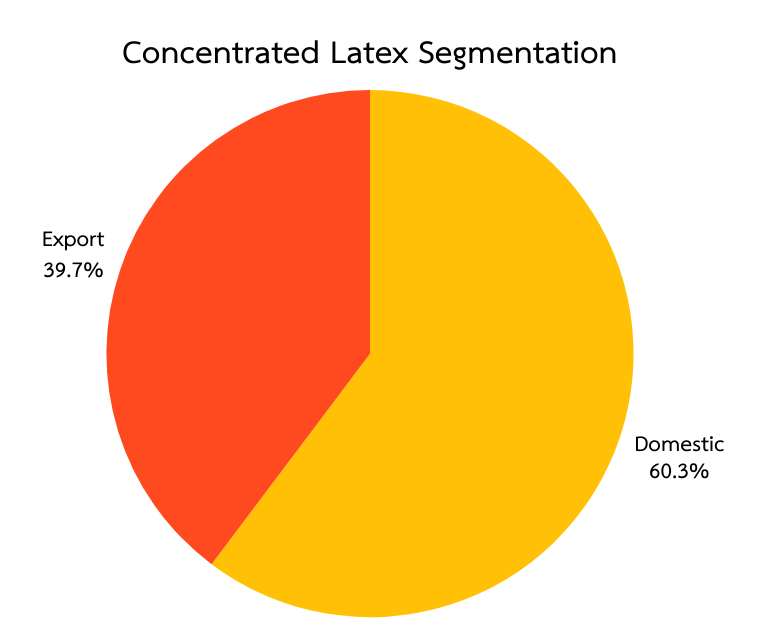
| Concentrated and Processed Latex Group | Concentrated Latex Characteristics of Products and Services Thai Rubber Latex Group Public Company Limited operates in the business of producing and distributing concentrated latex using a mechanical centrifugation process to increase the rubber content from fresh natural latex according to international standards. The quality-matured concentrated latex is then used as a primary raw material in various downstream rubber product industries, such as medical, industrial, and household rubber gloves, condoms, elastic threads, mattress and foam rubber products, sports equipment (footballs), as well as rubber nipples, rubber seals, and industrial adhesives. Thai Rubber Latex Group Co., Ltd. (Shanghai) is registered in China and engages in the trading of all types of rubber products in China, primarily trading in block rubber (TSR#20) and concentrated latex. Currently, Thai Rubber Latex Group Public Company Limited has received standard certifications such as ISO 9001:2015, ISO 14001:2004, FSC-FM and FSC-COC (Sustainable Rubber Plantation Certification), Organic Rubber Plantation Certification and GOLS Concentrated Latex, IEC 17025 (Standard Lab). The company is the first in the concentrated latex industry to receive IEC 17025 certification, which certifies laboratories meeting standards for latex testing. Concentrated latex products can be divided into 15 items as follows: 4 items - Concentrated latex 60% DRC (high Ammonia, medium Ammonia, low Ammonia, and very low ammonia types) 3 items - Concentrated latex 60% DRC (high ammonia, medium ammonia, and low ammonia types, packaged in 205-liter drums) 1 item - Concentrated latex 60% DRC (Double Centrifuged) 2 items - Concentrated latex 60% DRC (Homogenized, high ammonia, and low ammonia types) 3 items - Blended latex, high modulus, medium modulus, and low modulus types 2 items - Skim rubber and crepe rubber Customer Characteristics, Relationships, and Target Customer Groups The company possesses a diverse customer base, ranging from small and medium-sized enterprises (SMEs) to large industrial factories, both domestically and internationally. The company's primary customer group consists of downstream industries that utilize natural rubber as a key raw material in the production process of finished products. To ensure efficient relationship management and responsiveness to customer needs, the company has categorized its target customer groups based on product characteristics as follows: 1) Medical and Health Products – Medical gloves and condoms 2) Personal Protective Equipment (PPE) – Industrial gloves and suits 3) Consumer Products – Balloons and rubber bands 4) Footwear 5) Textiles - Elastic threads 6) Adhesives 7) Sports Equipment - Balls 8) Automotive Industry - Various automotive parts 9) Furniture - Mattresses and pillows 10) Construction – Latex paint and concrete admixtures 11) Asphalt - For road construction Customer Relationship Management Strategy "The company operates on a customer-centric principle, focusing on building and maintaining long-term strategic relationships through comprehensive operations as follows: Proactive Engagement: Regularly visiting customer premises to provide technical consultation and share useful information on natural latex market conditions, thereby enabling customers to efficiently plan their raw material management. Collaborative Innovation: Supporting research and development (R&D) with customers by offering new innovative products and jointly resolving production process issues to enhance product quality and improve customer production efficiency. Excellence in After-Sales Service: Providing diverse and prompt support services, along with establishing a Customer Feedback Loop system to continuously improve operational processes and service quality based on insights." Distribution and Distribution Channels The Company’s natural rubber latex distribution covers markets worldwide and is supported by a professional and experienced sales and marketing team based at the headquarters as well as the sales office in Guangzhou, China. Our sales approach encompasses direct transactions with domestic end-user customers, serving a wide range of clients from individual consumers to large-scale manufacturing plants. At the international level, our sales operations are diversified, involving both direct engagement with customers and transactions conducted through intermediaries, such as trading companies or distributors. Domestic sales are tailored to a diverse range of customers, from small retailers to large factories. Our flexible packaging options meet various needs and include trucks with capacities ranging from 12 to 30 tons, steel drums with a capacity of 200 kg, Intermediate Bulk Containers (IBCs) each holding 1000 kg, and ISO pressure tanks with a capacity of 21 tons. This range ensures we can comprehensively meet the specific requirements of our customers. For international sales, the company utilizes a variety of packaging options to accommodate diverse shipping requirements and customer needs, such as bulk vessels (30,000 kg), Flex tanks / flex bags (21,000 kg), new IBCs of 1,000 kg, and new steel drums (205 kg). This diversified packaging strategy enables the company to expertly meet the varying demands of both domestic and international customers. In summary, the natural latex market in 2025 was significantly impacted by a combination of economic challenges, increased competition from synthetic rubber substitutes, and evolving regulatory requirements. Reduced demand from key regions such as Thailand, Malaysia, China, and Europe exerted pressure on the market. However, the company's strategic shift to focus on the domestic market enabled us to sell approximately 84,767 metric tons of concentrated latex in 2025. Upon analyzing sales details, domestic sales of concentrated (wet) latex reached 51,084 tons, representing a significant proportion of approximately 60% of total sales. This underscores the company's outstanding and strong potential in dominating market share and maintaining a stable domestic customer base amidst industry fluctuations and challenges. Conversely, international sales of concentrated (wet) latex amounted to 33,683 tons, representing approximately 40% of total sales. While this figure indicates a strong position in the international market, it also reflects various challenges encountered within this market segment.
Natural Rubber and Concentrated Latex Market Trends 2026 Macroeconomic Trends and Demand Global economic conditions are expected to show gradual signs of improvement in 2026, led by stability in China and recovery in major economies. This recovery is likely to support higher demand for natural rubber, particularly from the tire and automotive-related industries. Furthermore, increased consumption from India and emerging markets, including Southeast Asia, the Middle East, and parts of West Asia, is anticipated to contribute significantly to overall demand growth. The expanding automotive sector, infrastructure development, and consumption trends driven by India's population position India as a significant growth engine. Concurrently, the expansion of industrial and healthcare sectors in Southeast Asia and the Middle East is expected to continue supporting the demand for latex-based products. Competitive Landscape Competition from China in the rubber glove and elastic thread manufacturing industries is expected to intensify in 2026. Chinese manufacturers continue to invest heavily in expanding production capacity, adopting automation, and optimizing cost management. Their ability to offer lower-cost alternatives will exert continuous pressure on traditional producing countries such as Thailand, Malaysia, and Vietnam, compelling these manufacturers to maintain high competitiveness through efficiency improvements, product differentiation, and the offering of value-added products. This competitive pressure is likely to accelerate industry consolidation and push smaller or less efficient players out of the market. Supply Constraints and Cost Pressures The global shortage of natural rubber and latex, caused by unfavorable weather conditions, unpredictable weather patterns, aging rubber trees, and labor constraints, is expected to persist in 2026. These factors may limit production growth and create ongoing supply uncertainty. Consequently, production costs are likely to remain high, accompanied by the risk of price volatility affecting both suppliers and downstream consumers. Manufacturers must carefully balance pricing strategies and customer retention amidst uncertain supply conditions. Geopolitical and Trade Risks Ongoing and emerging geopolitical tensions, particularly in East Asia, South America, the Middle East, and the Russia/Ukraine region, are expected to continue impacting global trade routes and supply chains. These disruptions may lead to higher logistics costs, longer transit times, and increased uncertainty throughout the natural rubber value chain. Furthermore, the role of the Trump administration (or broader changes in US trade policy) could introduce new trade barriers, tariffs, or sanctions. Such measures might impact the flow of global rubber trade, especially for countries heavily reliant on exports to the US or its allied markets. Market Diversification and Growth Opportunities Given the challenges in traditional export markets, strategic diversification into new and underserved markets will be crucial for growth. Countries such as Sri Lanka, India, Turkey, and the Middle East hold strong potential due to
Building strong local partnerships, distribution networks, and offering tailored products will be key to seizing these opportunities. Overall, the natural latex market in 2026 is expected to remain stable compared to 2025, characterized by a balance between recovering demand and persistent structural challenges. Economic stagnation in some regions, intense competition from low-cost producers, and ongoing supply constraints will continue to pressure market performance. However, initial signs of economic recovery, coupled with aggressive market expansion and operational process optimization, may lead to selective and directional growth opportunities. By focusing on stringent cost management, enhancing productivity, sustainability initiatives, and readiness to adapt to dynamic market conditions, natural concentrated latex producers can more effectively manage the complex challenges of 2026, while building a strong foundation for long-term resilience and sustainable growth. Estimated Number of Competitors There are numerous concentrated latex producers in Thailand, with approximately 3-4 competitors of similar size to the company in the industry. Company Size Compared to Competitors The company aims to be a leader in the natural rubber latex production industry with outstanding international competitiveness, adhering to globally recognized production standards and quality. Competitive Strengths 1. Globally Recognized Quality: Our commitment to superior quality establishes us as a recognized leader on the global stage. 2. Reputation: A strong reputation built on reliability, integrity, and consistent quality sets us apart in the market. 3. Fair and Competitive Pricing: Offering competitive and transparent pricing ensures value for our customers. 4. Commitment to On-Time Delivery: Delivering according to contractual agreements underscores our dedication to customer satisfaction. 5. After-Sales Service: Our accessible after-sales service ensures prompt responses and effective problem-solving methods. 6. Experienced Team: Our knowledgeable and experienced team in the rubber industry enhances our capabilities. 7. Diverse Product Portfolio: Our extensive product range caters to diverse market demands, enhancing our market share. 8. In-house Research and Development: An R&D department that drives innovation and keeps us at the forefront of industry advancements. 9. Geographically Distributed Facilities: Strategically located facilities ensure production flexibility and year-round supply chain resilience. 10. Strong Customer Relationships: Building positive and sustainable relationships with customers is a cornerstone of our business. 11. Diverse Customer Base: Serving a wide range of customer groups, in terms of both products and size, reflects our adaptability. 12. Efficient In-house Logistics: Our agile in-house transport vehicles ensure efficient supply chain management. 13. Large latex storage tanks: Our large latex storage capacity enhances our ability to consistently meet market demands. Skim Rubber Blocks Product or Service Characteristics: Thai Rubber HPNR Co., Ltd. currently primarily operates in the trading of skim rubber blocks. The company also owns a rubber glove manufacturing plant with the necessary licenses; however, this plant is not currently operational and is in the process of seeking a buyer or tenant. | ||||||||||||||||||||
| Rubber Product Group | Elastic Thread Product or Service Characteristics Worldflex Public Company Limited ("the Company" or "WFX") operates the business of manufacturing and distributing elastic threads (Rubber Thread), which are divided into two types: Talcum Rubber Thread and Silicone Rubber Thread. The company sells products to both domestic and international customers under a total of seven company trademarks: WORLD FLEX, THAITEX, QUALIFLEX, LT RUBBER, CHANGTHAI, PEGASUS (Blue), PEGASUS (China), and ECOFLEX. Currently, the company has one elastic thread manufacturing plant located in Pluak Daeng District, Rayong Province, as of December 31, 2024. The products manufactured and distributed by the company are detailed as follows: 1) Talcum Rubber Thread is an elastic thread coated with talcum powder, which is a fine powder similar to face powder, to prevent the elastic threads from sticking together and to facilitate the separation of each elastic thread during use. This is suitable for various industries, including general textile industries, medical textile industries, and furniture industries. 2) Silicone Rubber Thread is an elastic thread coated with silicone, a glossy coating in the form of plastic water mixed with chemicals, to prevent the elastic threads from sticking together and to facilitate the separation of each elastic thread during use. This is suitable for industries that prioritize environmental concerns and reduce dust pollution from powder coating, such as general textile industries, medical textile industries, and furniture industries. Customer Relationship Characteristics The company's business operations involve contact and sales through two main channels, as follows: Sales through distributors: Distributors purchase the company's products and resell them to end-users in their respective countries. This channel allows for wider distribution of products to reach more retail customers in various countries. Direct sales to end-users involve selling products directly to consumers who are manufacturers of various goods, such as clothing manufacturers, sock manufacturers, and furniture manufacturers. All domestic sales of elastic threads are made directly to customers. Sales and Distribution Channels Depending on the size, structure, and specific needs of each market, the company establishes distribution channels to maximize market share by selling directly to end-users, selling to distributors, or utilizing both sales channels in the same market. The company has key strengths supporting its business, including:
Product Procurement Raw Material Procurement Characteristics The company prioritizes selecting quality raw materials according to specified standards and at appropriate prices. Over the years, the company has continuously built good relationships with suppliers, adhering to trade agreements and maintaining a good payment history, which has established business credibility with its partners throughout more than 30 years of operation. The company procures products and services for elastic thread production as follows: (1) Concentrated Latex Concentrated latex is the primary raw material used in the production of elastic threads. The company has established procedures for selecting and purchasing concentrated latex from suppliers. For each concentrated latex order, the company contacts at least three suppliers to inquire about the available quantity and the selling price of concentrated latex. The company then compares the required quantity and suitable prices to select the most beneficial supplier(s). However, for each order, the company may purchase concentrated latex from a single supplier or more than one, depending on the suitability of the required quantity and the concentrated latex's selling price. For each concentrated latex order, the company will refer to the market price on the order date, which is the price offered by each supplier to the company. The company will compare the suitability of the price and the quantity that each supplier can provide before placing any order. Furthermore, the company has established standard specifications for concentrated latex used in product manufacturing, which are communicated to concentrated latex suppliers prior to any transaction. The company has a two-step quality inspection process for concentrated latex from suppliers: the first inspection involves checking the quality of concentrated latex samples sent by the supplier one week before delivery, and the second inspection involves checking the concentrated latex before product delivery at the elastic thread manufacturing plant in Rayong Province, to ensure that the company receives concentrated latex with the specified properties. (2) Chemicals The company procures chemicals used in the production of elastic threads, meeting specified properties at competitive prices, from various domestic and international suppliers. The company inspects chemicals from suppliers every time before product delivery and before their use in the production process. (3) Packaging The packaging company for each brand uses corrugated cardboard boxes as outer packaging and plastic-based packaging as inner packaging to enhance product safety during transit. The company contracts external packaging manufacturers and distributors for packaging production and inspects packaging from these manufacturers and distributors every time before using it in the product packaging process. (4) Fuel and Energy The primary energy used by the company in the elastic thread production process is thermal energy. Currently, the company uses fuels such as coal, wood chips, and palm kernel shells to provide thermal energy in the elastic thread production process. The company procures these fuels from domestic suppliers and international importers to obtain high-quality fuel at a low cost. Environmental Impact The company focuses on producing quality products while also caring for the environment. The elastic thread production process generates waste byproducts, namely acetic acid and wastewater from production. Degraded acetic acid is sent for disposal by licensed external companies specializing in industrial waste disposal. Wastewater contaminated with chemicals from the production and product washing processes is partially treated in on-site wastewater treatment ponds, allowing the treated water to be reused in the production process. Wastewater that cannot be treated and reused is sent for disposal by licensed external companies specializing in industrial waste disposal. Rubber scraps from the production process or substandard rubber scraps are sold to external rubber scrap buyers. Additionally, the company has installed equipment to prevent air pollution that may arise from the production process, such as powder dust and soot from fuel combustion, etc. The company regularly monitors and controls the environmental quality within the factory and periodically prepares environmental quality inspection reports conducted by external parties for submission to the Department of Industrial Works. To date, the company has had no disputes regarding environmental impact of operations. Latex Pillows, Mattresses Product or Service Characteristics Latex Systems Public Company Limited was registered and established on June 11, 2003, to operate the business of manufacturing and distributing mattresses made from natural latex. Its first factory, located in Lat Krabang Industrial Estate, Bangkok, ceased production in November 2018. In 2013, Factory 2 (Production Line 2) in Bangpakong District, Chachoengsao Province, began commercial production of natural latex mattresses. In 2017, Factory 2 (Production Line 3) in Bangpakong District, Chachoengsao Province, began commercial production of natural latex pillows. In September 2018, the company acquired control of assets and purchased Factory 3, located in Kong Din Subdistrict, Klaeng District, Rayong Province. This factory is currently not in production due to the COVID crisis and is in the process of being sold to generate liquidity. In 2023, Factory 2 added a Latex sheet production line and began commercial production of natural latex sheets in 2024. Currently, the company has two factories, one in Bangpakong District, Chachoengsao Province, and another in Klaeng District, Rayong Province. The company's business operations can be divided into two main groups: 1) Business of manufacturing and distributing products made from natural latex without a brand (Non-Brand Business) 2) Business of manufacturing and distributing products made from natural latex under the company's brand (Brand Business) The company's main products are divided into three groups:
Latex Bedding and Future Trends Latex Bedding is gaining global interest due to its properties aligning with health and sustainability demands, which are linked to key trends emerging in the present and future, as follows: 1. Sustainability and Environmental Conservation
2. Emphasis on Health and Quality Longevity
3. Minimalism and Quality Trends
4. Global Market and Growth
5. New Technologies for Product Development
Sustainability Aspects Latex bedding is deeply connected to Carbon Credit and Sustainability, as its production process and the properties of latex raw materials support the reduction of greenhouse gas emissions (Carbon Footprint) and promote sustainable development in various dimensions, as follows: 1. Rubber Tree Cultivation and Carbon Sequestration
2. Production that Reduces Carbon Footprint
3. Biodegradability and Circular Economy
Opportunities and Challenges Opportunities
Challenges
Industry Overview The current state of the latex bedding industry reflects significant changes in the global market, particularly its connection to economic factors, technology, and consumer demand. Related industry aspects can be analyzed as follows: 1. Manufacturing Trends
2. Global Demand
3. Industry Competition
4. Impact of Global Economic Conditions
5. Sustainability Trends in the Industry
It is evident that the latex bedding industry has high global growth potential, especially in markets that prioritize health and environment. However, value addition and upgrading production standards will be key factors enabling manufacturers to compete in the long term. Product Procurement (1) Raw Material Procurement Characteristics Concentrated latex is considered the primary raw material for manufacturing mattresses, pillows, and other products made from natural rubber. As concentrated latex is an agricultural commodity, its price is subject to volatility driven by changes in the global and domestic demand and supply of natural rubber. Over the past three years, the average price of concentrated latex (FOB Bangkok) has fluctuated within the range of 30 – 60 Baht per kilogram. In line with the company's business policy, which emphasizes product quality and raw material quality control from the procurement stage, the company's raw material procurement policy focuses on quality, price, and delivery time. The company sources its main raw material, concentrated latex, from several leading domestic concentrated latex producers to obtain high-quality natural concentrated latex that meets the company's specifications at a reasonable price. Other chemical raw materials are purchased from domestic distributors. The company remains confident in its future business growth because the crisis caused by COVID has passed. Therefore, the world must now recover as quickly as possible, and the trend of health consciousness is continuously increasing, presenting a significant opportunity for sustained business growth. Impact on the Company due to Global Situations Global situations in recent years have significantly impacted the latex bedding industry, both positively and negatively. Key factors playing a role and their effects are as follows: 1. Global Economic Situation 1.1 Inflation and Rising Production Costs
1.2 Currency Fluctuations
2. Environmental and Sustainability Changes 2.1 Pressure from Environmental Policies
2.2 Climate Change
3. Political and Trade Changes 3.1 Geopolitical Tensions
3.2 Building Trade Partnerships
4. Health Situation and Consumer Behavior 4.1 Importance of Health and Rest
4.2 Rise of Online Shopping
5. Technological Changes 5.1 Use of AI in Production
5.2 Digital Marketing
6. Opportunities and Challenges from Global Situations Opportunities
Challenges
Revenue Structure 1. Proportion of Domestic and International Sales Product Sales Structure, Sales Proportion in Each Country, Divided into 4 Main Departments, Sales for 2025
2. Sales Proportion by Country
Note: The revenue shown is net revenue after deducting returns, discounts, and commissions. 3. Production (Number of Factories/Total Production Capacity) Currently, the company has two factories producing mattresses, pillows, and other products made from natural latex. Factory 1 Location: 79/2 Moo 1, Bangna-Trad Road, Kilometer 36, Homsil Subdistrict, Bangpakong District, Chachoengsao Province 24180
Factory 2 Location: 160/2 Moo 4, Kong Din Subdistrict, Klaeng District, Rayong Province 22160
Rubber Gloves Thai Rubber Gloves Company Limited was registered and established on January 8, 2021, to operate the business of manufacturing and distributing medical rubber gloves and general-purpose rubber gloves, using natural latex or nitrile latex (synthetic rubber) as raw materials. The production plant is located in Nong Yai District, Chonburi Province, with a production capacity of approximately 450 million pieces per year. The company's main products can be divided into three groups: 1) Examination Gloves 2) Disposable Gloves 3) Gloves for Food and Electronics Industries and can be divided by glove type as follows: 1) Latex Powdered Gloves 2) Latex Powder-Free Gloves 3) Nitrile Powder-Free Gloves Product Procurement • Raw Material Procurement Characteristics The company prioritizes the selection of raw materials to maintain production standards and quality at appropriate prices, in line with the company's policy. This involves trade agreements with suppliers, or even collaborative development with manufacturers, to obtain raw materials suitable for the company's product manufacturing. 1) Concentrated Latex (Latex, Nitrile) Concentrated latex is the primary raw material for glove production and is an agricultural commodity subject to price and seasonal fluctuations. The company forecasts the necessary quality, price, and quantity for production to manage costs most optimally. 2) Chemicals The company procures chemicals used in glove production, meeting specified properties at competitive prices, from both domestic and international suppliers. The company inspects chemicals from suppliers every time before product delivery and before their use in the production process. The company also conducts experiments to find alternative chemicals that offer good efficiency and suitable production costs. 3) Packaging The company inspects the accuracy and quality of packaging from manufacturers and distributors every time before using it in the product packaging process, either for packaging products with the company's trademarks or to accommodate customers who wish to produce goods under their own trademarks (OEM). 4) Fuel and Energy Thermal energy is the primary energy used in glove production. The company procures solid fuels such as wood chips and palm kernel shells from domestic suppliers and international importers to obtain high-quality fuel at the lowest possible cost. Environmental Impact The company has efficiently managed its production operations to deliver the best products for consumers while also caring for the environment. The company prioritizes and implements measures for preventing and controlling the environmental impact of its business operations. The company has registered and received the Green Industry Level 2 certification from the Ministry of Industry, installed solar power generation systems (Solar Cells), and regularly monitors and controls environmental quality before releasing anything into the community. Furthermore, environmental quality inspection reports are prepared and submitted to the Department of Industrial Works annually. | ||||||||||||||||||||
| Agricultural Garden Group | Rubber Plantations Product or Service Characteristics Thai Rubber Land and Plantation Company Limited, a subsidiary, operates rubber plantation businesses in Chiang Rai, Phayao, and Nan provinces. Planting commenced in 2005 and continues to the present, with a total area of 11,068 rai, comprising:
Cannabis Plantation Group Product or Service Characteristics Thaitex CBD Smart Farm Company Limited, a subsidiary, operates cannabis plantation businesses under Thai traditional medicine standards in Chiang Mai and Chiang Rai provinces. Planting commenced in 2022 and continues to the present, with a total cultivated area of 13 rai, comprising:
|
Research & Development
Has R&D Policy (Y/N)
Yes
R&D Cost — Description
1. Year 2023
The budget has increased to expand the scope of research and development for new products, such as the CNR rubber project. Previously focused on quality testing and concentrated latex research, it now extends to improving formulas and production processes for greater efficiency, as well as developing new products.
Budget allocation is made for collaborative research with academic institutions and private sector partners to foster cooperation and knowledge exchange.
Investment in personnel and training is made to enhance employee potential.
2. Year 2024
Increased budget focuses on innovative product development that is more environmentally friendly and socially responsible, such as ammonia-free latex, low-protein latex, development of low-nitrosamine latex formulas, and the continued application of NIR instruments for analyzing concentrated latex properties and various downstream rubber products.
Establish and expand cooperation networks with international companies and organizations for technology transfer, international standard testing, and long-term market trend research.
Investment in personnel and training is made to enhance employee potential.
3. Year 2025
The research and development budget for 2025 tends to decrease and emphasizes efficient resource utilization, focusing on extending previous research outcomes into practical commercial and industrial applications rather than initiating large new projects.
Emphasis is placed on improving production processes and quality control to enhance the stability of concentrated latex products and downstream rubber products, ensuring compliance with international standards, as well as environmental, safety, and sustainability requirements.
Existing knowledge, technology, and tools, such as NIR analysis and statistical data from previous research, are utilized to support decision-making, cost reduction, and operational efficiency.
Focus is placed on developing the potential of internal personnel through in-depth training, knowledge transfer from past projects, and skill development in research, data analysis, and quality assurance to support long-term operations.
Support operations related to quality systems and standard certifications for research and testing, to maintain laboratory credibility and build confidence among domestic and international customers and partners.
Testing Concentrated Latex Properties with NIR Instrument: Innovation and Environmentally Friendly Safety
Currently, quality and property control of concentrated latex often employs chemical testing methods that involve complex procedures and may generate hazardous chemical waste for operators and the environment. To elevate safety standards and environmental sustainability, Near Infrared Spectroscopy (NIR) technology has been adopted for testing concentrated latex properties, replacing traditional methods. This represents a new innovation that provides accurate, rapid, and environmentally friendly analytical results.
Advantages and Benefits of Using NIR Instruments
1. Testing Speed
The NIR instrument can instantly measure concentrated latex properties from the near-infrared light spectrum, thereby reducing testing time compared to chemical methods which may require multiple sample preparation steps.
2. High Safety
NIR testing does not require hazardous chemicals, reducing health risks for operators and environmental contamination. It also minimizes the amount of waste that needs proper disposal.
3. Accuracy and Reliability
The NIR instrument can accurately analyze various components of concentrated latex, such as Dry Rubber Content (DRC), Total Solids Content (TSC), Alkalinity, KOH, and also test the crosslink density properties in various grades of pre-vulcanized latex. This information is crucial for developing products to meet standards.
4. Cost Reduction and Environmental Friendliness
By eliminating the use of chemicals, NIR testing helps reduce both testing process costs and waste disposal costs. This represents a sustainable option that helps reduce environmental pollution.
Product Innovation and Safety
The application of NIR in the concentrated latex industry builds confidence in the quality and safety standards of rubber products derived from concentrated latex, due to the high accuracy of testing data.
Reduces health and safety risks for personnel as there is no direct contact with chemicals.
Users do not require specialized skills or experience in testing, which helps reduce testing costs.
Promotes the organization's image as a manufacturer that prioritizes environmental and social responsibility.
Research and Development Information
The development of a concentrated latex spectrum model using NIR requires collaborative research with rubber science experts to create appropriate databases and analytical equations.
Regular improvement of the calibration process to ensure accurate and consistent measurement results from the NIR instrument in the long term.
Procurement of safe and environmentally friendly products (goods and services)
Procure and select NIR instruments that meet international standards, with accepted protection and quality assurance systems.
Collaborate with companies, universities, or technology service providers specialized in installation, training, and maintenance to ensure the instrument operates at full efficiency and sustainability.
Aims to reduce waste and chemical usage throughout the supply chain, building confidence in product quality and safety for consumers and the environment.
The adoption of innovative concentrated latex testing with NIR instruments, replacing chemical testing, is a significant step in elevating the rubber industry to align with sustainable development guidelines. It not only raises safety and environmental standards but also fosters trust in products and services.
R&D Cost — Label
Research and development (R&D) expenses over the past 3 years (Million Baht)
R&D Cost — This Year
4500000.0
R&D Cost — Last Year
4950000.0
R&D Cost — 2 Years Ago
6500000.0
Assets Used in the Business
Permanent Assets — Description
The Company and its subsidiaries operate an integrated business in the production, distribution, and export of rubber products. The main fixed assets used in production are land, buildings, factories, machinery, and construction in progress, of which the Group holds ownership as follows:
Permanent Assets — Appraisal
| Asset | Ownership | Obligation | Appraisal Value | Description |
|---|---|---|---|---|
| 1. Land and land improvements | Owned by the Group of Companies | Partly mortgaged with a financial institution | 1,646 | |
| 2. Buildings and building improvements | Owned by the Group of Companies | Mortgaged with a financial institution | 1,129 | 2.1 Office buildings located in Samut Prakan and Chiang Rai (Owned by the Group of Companies): Office building is mortgaged with financial institution. 2.2 Five latex factories Located in Chonburi, Rayong, Surat Thani, Songkhla and Chiang Rai (Owned by the Group of Companies): Mortgaged with a financial institution. 2.3 One elastic yarn factory located in Rayong (Owned by the Group of Companies): Mortgaged with a financial institution. 2.4 One factory for producing mattresses, pillows, rubber, located in Chachoengsao (World Flex PCL.): Mortgaged with a financial institution .2.5 Three greenhouses used in the rubber plantation, located in Chiang Rai, Nan, Phayao. (Thai Rubber Land and Plantation Co., Ltd.): Mortgaged with a financial institution. |
| 3. Machine | Owned by the Group of Companies | Mortgaged with a financial institution | 500 | 3.1 Machines used to produce latex (Owned by the Group of Companies): Partly mortgaged with a financial institution. 3.2 Machines used to produce elastic yarn (World Flex PCL.): Mostly mortgaged with financial institutions. 3.3 Machines used to produce mattresses, latex pillows(Latex Systems PCL.): Mostly mortgaged with financial institutions 3.4 Machines used to produce rubber plantation (Thai Rubber Land and Plantation Co., Ltd.): Not having a mortgage with a financial institution. |
| Construction in Progress | Owned by the Group of Companies | Mortgaged with a financial institution | 4 | |
| Other assets | World Flex PCL. | Mortgaged with a financial institution | 38 |
Intangible Assets — Description
The Group has intangible assets used in its business operations with a net book value as of December 31, 2025 amounting to 6.72 million Baht, consisting of computer software and rights to use research results, which have a duration throughout the period of intellectual property protection under the law.
Has Subsidiaries Investment Policy (Y/N)
Yes
Subsidiaries Investment Policy — Description
The Company has a policy to invest in businesses that are linked to its core operations, specifically the production and distribution of concentrated latex and its by-products. This involves investing in manufacturing businesses for sale, particularly those with high demand and significant growth potential. The objective is to comprehensively meet customer requirements, thereby enhancing competitive capabilities and mitigating the risk of over-reliance on revenue generated from concentrated latex products and latex by-products. The investment proportion is sufficient to enable the Company to participate in the management and strategic direction of these businesses.
Marketing Policy & Competition
Reporting Mode
3116
Per-Business-Group Breakdown
| Marketing Policy | Industry & Competition | |||||||||||||||||||||||||||||||||||||
|---|---|---|---|---|---|---|---|---|---|---|---|---|---|---|---|---|---|---|---|---|---|---|---|---|---|---|---|---|---|---|---|---|---|---|---|---|---|---|
Concentrated Latex Marketing Policy in the Past Year Thai Rubber Latex Group stands as a prominent leader among global concentrated latex producers and holds a dominant position in Thailand's domestic market with a significant market share. With over three decades of experience in the concentrated latex production industry, the company has earned widespread recognition for its unwavering commitment to quality. The company operates through five strategically located production facilities across Thailand, boasting a combined production capacity of 300,000 metric tons. In 2025, the company further enhanced its production potential by installing additional latex centrifuges. These facilities are situated in key regions, including Hat Yai and Surat Thani in the South, Rayong in the East, and Chiang Rai in the North, ensuring continuous production of high-quality latex throughout the year. Thai Rubber Latex Group is supported by a highly skilled team with expertise in concentrated latex production, stringent quality control, and research and development. This combination enables the company to maintain its leadership in innovation, continuously introduce new products, and enhance the quality of latex products to meet evolving customer demands. Positive customer feedback serves as a testament to their satisfaction with the company's superior products and services. To align with global sustainability goals, the company has actively participated in various projects promoting responsible and sustainable practices. Obtaining certifications and standards such as the Forest Stewardship Council (FSC), the European Union Deforestation Regulation (EUDR), the Global Organic Latex Standard (GOLS), and the Corporate Carbon Footprint Reduction Project all underscore its commitment to sustainability. Furthermore, Thai Rubber Latex Group's dedication to Environmental, Social, and Governance (ESG) principles reinforces its role as a responsible global concentrated latex producer. In summary, Thai Rubber Latex Group's unwavering commitment to quality, innovation, and sustainability has solidified its position as a leading producer in the concentrated latex industry, playing a significant role in both national and international markets. Skim Block Rubber The company procures skim block rubber from its parent company and sells it to customers. In the current market conditions, the factory, which is a concentrated latex producer, serves as the primary source that produces skim block rubber and distributes it mainly to domestic rubber industrial factories, such as rubber band factories. | Concentrated Latex Impact of Weather Conditions on Thailand in 2025 In recent years, Thailand has experienced severe weather variability, largely due to the shifting influences of the El Nino and La Nina phenomena. The transition between these two phenomena in 2025 had widespread impacts on the agricultural sector, particularly the natural rubber industry. During the first half of 2025, unusually heavy and continuous rainfall led to an earlier-than-scheduled start of the rubber wintering season (leaf-shedding season). However, this period was shorter than usual due to erratic weather. Typically, the second quarter of the year is hot and dry, but in 2025, continuous heavy rainfall occurred during this period and extended until the end of the year. Thailand's monsoon season, typically predictable in both timing and intensity, extended significantly longer than usual in 2025 and was markedly more severe than in previous years. The combination of excessive rainfall and strong winds resulted in widespread flooding across the North, Northeast, and South. These extreme weather events caused extensive damage to infrastructure and agricultural areas, including rubber plantations. Between October and December 2025, several key natural rubber cultivation areas in Southern Thailand were severely affected by floods. The situation was exacerbated by multiple typhoons that struck Southeast Asia, including Thailand, Vietnam, the Philippines, Malaysia, and Indonesia. Consequently, Thailand's natural rubber sector, a cornerstone of its economy, faced significant operational challenges. Continuous rainfall and flooding disrupted rubber tapping activities and transportation, leading to severe rubber supply shortages. Overall, the La Nina phenomenon in 2025 significantly impacted Thailand's weather, causing supply chain disruptions, increased production costs, and posing substantial challenges to maintaining the profitability of the natural rubber industry. These events underscore the urgent need for adaptive strategies and operational resilience planning to cope with the increasing unpredictability of global weather patterns and their effects on critical industries. Impact of the La Nina Phenomenon on Thailand's Rubber and Latex Industry in 2025 Throughout 2025, Thailand faced extreme weather conditions with continuous rainfall and higher-than-normal precipitation, a result of the La Nina phenomenon. This abnormal weather pattern posed significant challenges to the country's agricultural sector, particularly the natural rubber and concentrated latex industries. The prolonged wet conditions severely impacted rubber tapping activities and latex processing, exacerbating supply shortages across the industry. The extended rainy season, lasting beyond its typical duration, further strained an already fragile supply chain by limiting the number of tapping days and reducing overall production efficiency. Competition for raw materials between Unsmoked Sheets (USS) and Field Latex intensified, leading to higher procurement costs. Raw material shortages extended beyond the wintering season as continuous rainfall hindered latex collection and transportation. These limitations were compounded by recurring extreme weather events, making it difficult for producers to meet both domestic and international demand. As a result of these supply disruptions, natural rubber raw material prices fluctuated significantly throughout 2025. According to data from the Rubber Authority of Thailand (RAOT), Unsmoked Sheet (USS) prices ranged from a low of 56.00 baht/kg to a high of 74.20 baht/kg, with an annual average of 63.54 baht/kg. Fresh latex prices fluctuated between 53.90 baht/kg and 70.70 baht/kg, averaging 59.25 baht/kg. Meanwhile, Cup Lump prices ranged from 51.25 baht/kg to 66.00 baht/kg, with an average of 56.38 baht/kg. In summary, continuous rainfall influenced by La Nina led to severe raw material shortages for Thailand's natural rubber industry in 2025. Coupled with intense competition for limited supply and rising production costs, these factors resulted in reduced latex consumption and high market volatility. The challenges encountered this year underscore the increasing vulnerability of the rubber sector to climate variability and the importance of adaptive measures to enhance supply chain resilience and security. Global Market Overview for Natural Rubber and Concentrated Latex, 2025 Quarter 1, 2025 (Q1/2025) In the first quarter of 2025, global demand for both natural rubber (NR) and concentrated latex showed promising signs, driven by a recovery in global manufacturing activities. Despite positive demand signals, the global natural rubber industry remained affected by uncertainty regarding the enforcement of the EUDR regulation, originally scheduled for January 2025 but postponed to January 2026. Prices for rubber and latex were also bolstered by the impending wintering season, which commenced earlier than usual in 2025. This early start prompted buyers to accelerate their orders in anticipation of sustained high prices throughout the wintering period. The imposition of high tariffs on several countries immediately led to panic in both commodity and financial markets. In Thailand, raw rubber prices plummeted by more than 10 baht/kg overnight, causing widespread repercussions for the global rubber industry. Futures markets in Osaka, Shanghai, and Singapore all fell to their lower limits as investors engaged in heavy selling, reflecting a broad collapse in commodities and stock markets. Following the tariff announcements, global demand for rubber and latex rapidly slowed. Global manufacturing activities weakened, particularly in countries with high trade proportions with the U.S. On the supply side, Thailand saw a recovery due to sufficient rainfall in late Q1, leading to an earlier-than-expected start to the new tapping season. Tapping activities resumed in late April in the Northeast and North, and late May in the South. Quarter 3, 2025 (Q3/2025) In the third quarter, the global natural rubber market remained constrained amidst international trade uncertainties and a clear slowdown in global economic activity. Demand for both rubber and latex remained sluggish, driven by ongoing policy volatility stemming from the U.S. retaliatory tariff measures under the Trump administration. Heavy rainfall in Thailand limited rubber supply, leading to a gradual recovery in natural rubber prices, supported by tight supply conditions and slightly improved demand. Market confidence also saw some improvement as U.S. retaliatory tariff measures eased, with tariff reductions announced for several countries. Furthermore, demand for EUDR-compliant rubber increased as buyers prepared for the new enforcement date in January 2026, following an earlier postponement from January 2025. Quarter 4, 2025 (Q4/2025) As the final quarter of the year commenced, extreme weather across Asia caused widespread disruptions. Heavy rainfall and typhoons resulted in severe flooding in major rubber-producing countries, including Thailand, Vietnam, Indonesia, China, Sri Lanka, and India. In Thailand, several key rubber-growing provinces in the South, including Trang, Nakhon Si Thammarat, Satun, Songkhla, Yala, and Narathiwat, were severely flooded in late November and early December. Songkhla province, the world's largest latex-producing area, experienced its worst flood in 300 years, halting rubber tapping activities for 2-3 weeks. Numerous rubber and oil palm plantations were submerged, infrastructure was damaged, and transportation was severely disrupted due to impassable main roads. Despite significant supply shortages resulting from these floods, rubber and latex prices did not rise substantially due to persistently weak global demand. The depreciation of the U.S. dollar further pressured exporters, as dollar-denominated goods became more expensive for consumers. Uncertainty regarding EUDR enforcement resurfaced with rumors of another postponement beyond January 1, 2026. This created confusion among European buyers, many of whom delayed purchasing EUDR-compliant raw materials pending clarification. Subsequently, on December 18, 2025, the European Union officially announced a further one-year postponement of EUDR enforcement to 2027. Skim Block Rubber Throughout 2025, the company was able to consistently source skim block rubber. However, due to the slowdown in the global economy, the company's customers, who are manufacturers and exporters, experienced a slowdown in line with macroeconomic conditions. The marketing department anticipates that this situation will persist for some time. The approach to maintaining the company's revenue base is to focus on sales to existing customers and ensure satisfaction in all aspects. | |||||||||||||||||||||||||||||||||||||
Elastic Yarn Marketing Policy in 2025 In 2025, the global economy still faces risks from the transmission of tight monetary policies by major central banks, such as inflationary pressures and high interest rates. Global trade has slowed, and economic growth has been sluggish in Europe and China, particularly in China's textile sector, which is the company's main market, recovering less than expected. The export sector also continues to recover slowly due to subdued global demand and ongoing geopolitical conflicts, leading to a contraction in industrial production. There are also other risk factors that are likely to have an increasing impact, especially the volatility of foreign exchange rates. Given the aforementioned factors, there is pressure on volume, selling prices, profit margins, and rising latex prices, affecting the company's revenue and costs. The company continues to advance and continuously update its marketing policies to keep pace with changes and is prepared to handle all situations as follows: 1.1 Expanding markets to other countries unaffected by geopolitical conflicts, including other areas in China. 1.2 Expanding the market to other segments to cover customer needs and responses. 1.3 Selling products in yarn sizes that Chinese manufacturers cannot yet produce, to avoid price competition and increase revenue. 1.4 Focusing on selling silicone-coated products, which have better prices than powder-coated types and fewer competitors. 1.5 Increasing acceptance of other currencies for payment beyond the US dollar, to align with and respond to the monetary policies of respective countries, thereby enhancing market competitiveness. 1.6 Building product awareness through sales channels (Brand Awareness), both direct, such as direct sales contact, and indirect, such as traveling to meet and discuss with international customers to address issues effectively, as well as developing products in collaboration with customers and incorporating feedback and suggestions for improvement. Competitor Overview Domestic elastic yarn manufacturers with machinery (horsepower) similar to the company include Natural Rubber Thread Co., Ltd., Longtex Rubber Industry Co., Ltd., and H.V. Filla Co., Ltd. (Source: Department of Industrial Works, Ministry of Industry). In the year In 2025, due to the global economic conditions that have not yet recovered, domestic manufacturers have been affected, resulting in a decrease in export volume and export value. The top 5 countries by export volume and value are China, Vietnam, Indonesia, Iran, and Egypt. Comparison of Countries, Export Volume, and Value (Source: Export Market Data by HS Code, Ministry of Commerce)
Domestic and International Sales Proportion In 2025, the company's sales proportion was 117 tons domestically and 19,951 tons internationally, respectively, accounting for a value of 11.91 million Baht and 2,126.45 million Baht. The sales of elastic yarn products are exported to various countries, with proportions by continent as follows:
Latex Pillows and Mattresses Marketing Policy and Characteristics The company focuses on producing mattresses, pillows, and other products made from 100% natural latex that meet standards and are reliable. Furthermore, the company prioritizes quality and environmental concerns, having received various certifications, trademarks, and awards such as the ISO 9001:2015 Quality Management System, the TIS mark (Thai Industrial Standard), which only a few manufacturers of 100% natural latex bedding products in Thailand have received, Green Industry Mark Level 2, Halal certification, and international quality standards like LGA Product and Eco Institute Label from quality certification institutes in Germany. This ensures customers receive high-quality, durable, environmentally friendly products at fair prices. The company also received the Thailand Top SME Award 2018 in the agricultural product manufacturing industry group and, in September 2019, the Asia Pacific Entrepreneurship Awards 2019 in the Corporate Excellence Category (Manufacturing Industry). Additionally, the company emphasizes adding value to products through research and development, creating innovative products under its own brands. In 2025, the company will focus its marketing on the concept of longevity for health-conscious individuals and sustainable living. Distribution Channels
o The company has distribution channels both domestically and internationally. For the domestic market, the company distributes products through key channels: wholesalers, mattress assembly manufacturers, distributors (Trader), and retail customers, among others. o For the international market, the company sells products through partners, including wholesalers (importers) and local distributors (Traders) abroad. o For the outlet, the objective is to clear products older than 1 year or downgraded products that do not affect usability. The outlet is located at the factory, and the company also participates in booths at various locations that align with its target.
Rubber Gloves Marketing Policy and Characteristics The company focuses on producing high-quality and diverse products to meet customer needs, with quality certifications. quality from various government and private sector agencies, both domestically and internationally, such as the Medical Device Control Division of the Food and Drug Administration (FDA), TIS standards, ISO 9001, ISO 13485, to ensure product quality for customers. Furthermore, the company also prioritizes environmental concerns, having improved various working environments and used environmentally friendly fuel raw materials, leading to the certification of Green Industry Mark Level 2 from the Ministry of Industry. The company continues to improve quality and develop new products to compete in the globally contracting glove industry market. Distribution Channels The company is one of the few manufacturers registered as a medical device manufacturer with the Food and Drug Administration, enabling it to legally produce and distribute medical gloves domestically. The company has also registered for the CE mark to export medical gloves to Europe and has registered with the US FDA for exporting medical gloves to the Americas. This indicates that the company has global distribution channels, both domestic and international. For the domestic market, the company distributes products through key distribution channels: distributors (Trader) and end-users. For the international market, the company sells products through local distributors (Trader) abroad. | Elastic yarn In 2025, the number of elastic yarn manufacturers and distributors in China increased, leading to price competition. The company sold products to maintain market share, but as the competitive situation had not eased, it reduced sales of highly competitive product types, focusing instead on products that other competitors could not yet produce. Although the company still relies on the Chinese market as its primary market, which is considered a major textile industry country, the company has also sold products to other countries to increase revenue. The risk factor is not significantly due to reliance but rather to the ongoing economic risks in China and the global economy affecting many countries. However, the company continuously monitors the situation closely and seeks solutions to prevent problems in both the short and long term. In its business plan, the company has proactively strategized by penetrating new markets, enabling it to produce and sell a wider variety of products in terms of both size and quality, thereby meeting diverse demands from both existing and new customer bases. Latex pillows and mattresses Due to the global economy's inability to stage a significant recovery, compounded by ongoing conflicts and the impact of "Trump Tariffs" affecting trade worldwide, the economic downturn persists and shows signs of intensifying. Many factories are facing challenges; however, it is forecasted that 2026 will remain relatively stable, similar to 2025. Despite this, trade opportunities still exist in certain markets, such as India, which represents a massive mattress market rivaling that of China. Latex bedding market in other regions outside Asia Due to increasing awareness of health, sustainability, and the demand for high-quality products, each region exhibits distinct trends as follows. 1. North America
2. Europe
3. South America
4. Africa
5. Middle East
6. Australia and New Zealand
Rubber gloves Competitive landscape and industry trends During 2021-2022, when the Covid-19 virus was severely widespread, rubber gloves were in high demand in the global market. This attracted many investors and speculators to enter this business, and existing manufacturers significantly increased their production capacity to meet the demand during that period. In the period after Q1 2022, the spread of the Covid-19 virus significantly decreased. Products available in the market began to enter a state of overstock and oversupply, causing product demand and prices to gradually decline. In 2023, the spread of the Covid-19 virus decreased to near-normal conditions, but rubber glove stock in the market remained high. This led to market dumping to clear inventory, causing product prices to drop significantly. Additionally, new business competitors emerged as investors opened factories during the COVID period, resulting in an oversupply of rubber gloves in the market. In 2024, market conditions almost returned to normal, but faced suddenly rising raw material (rubber) costs and a strengthening exchange rate. Preparations must also be made for increasing labor costs in 2025, in line with government policy. In 2025, market conditions returned to normal, but competition remains high, labor and raw material costs have increased, exchange rates have strengthened due to the global economic situation, and there is a labor shortage due to unrest in neighboring countries. Industry conditions In the industrial sector in 2025, the company continues to contend with rising costs such as labor, electricity, fuel, exchange rates, labor shortages, and, importantly, higher raw material costs. However, product prices cannot be increased due to market oversupply, and the company must also compete on price with imported gloves. Nevertheless, other glove market segments, such as surgical gloves, sterile gloves, and gloves for the electronics industry, have been less affected in terms of both price and demand. However, the demand for imported goods is trending upwards. Towards the end of the year, raw material prices are expected to adjust upwards, driven by forecasts of drought issues in 2026. Nevertheless, President Donald Trump's policies and interventions in other countries have caused currency exchange rates to fluctuate, significantly impacting export prices. | |||||||||||||||||||||||||||||||||||||
Rubber Plantations Policies and Marketing Characteristics In 2025, the subsidiary will supply fresh latex from rubber plantations to the parent company's factory, namely, Thai Rubber Latex Group Public Company Limited, located in Chiang Rai province, for the production of high-quality concentrated latex. This arrangement allows the parent company and its affiliates to control the quality of raw materials, as these raw materials originate from rubber plantations within the same affiliated group. Cannabis Plantation Group Policies and Marketing Characteristics In 2025, a purchase-sale agreement was entered into under the name of Thaitex CBD Smart Farm Company Limited, referred to as the 'subsidiary,' with the objective of distributing high-quality dried cannabis flowers to customers. The business of producing cannabis flowers is characterized by high market value and relatively high returns. Currently, the company has secured customers for its full annual production capacity. Furthermore, the company aims to produce premium-grade cannabis flowers for medical use, to be distributed to international customers in the global market. | Rubber Plantations In 2025, rubber plantations in the Northern region were located in new rubber cultivation areas and gradually began to yield more produce to the market. However, most of the Northern region still predominantly produces cup lump rubber. This implies that the subsidiary will have no business competitors, as it produces fresh latex and delivers all its produce to Thai Rubber Latex Group Public Company Limited in Chiang Rai province. Currently, the company has been providing knowledge to rubber plantation owners in the Northern region to encourage them to produce fresh latex instead of cup lump rubber, thereby increasing income for the rubber plantation owners. This also aligns with the provincial policy on environmental preservation and air pollution caused by cup lump rubber, while simultaneously increasing production for affiliated companies to enhance the value of fresh latex and profits for the group of companies. Cannabis Plantation Group In 2025, the cannabis plantations of Thaitex CBD Smart Farm Co., Ltd. had customers who entered into sales contracts with the company. The company sells all its products to its business partners, which means the company will have no business competitors. Furthermore, companies wishing to conduct similar business must obtain proper legal authorization, resulting in a limited number of competitors. The company's production volume is still insufficient to meet the demand of the cannabis flower market. Currently, the number of growers has significantly decreased because the government has issued stricter laws to control cultivation and distribution. |
Procurement of Products & Services
Reporting Mode
3117
Procurement (Overall)
Product procurement comprises in-house production from factories located in various regions of Thailand and procurement from other concentrated latex manufacturers, to ensure that the products are of high quality and can continuously meet market demands.
Raw Material Acquisition (Overall)
Product sourcing comprises internal production from factories located in various regions of Thailand and procurement from other concentrated latex manufacturers, to ensure product quality and continuous responsiveness to market demand.
The sourcing of concentrated latex products for sale from other manufacturers depends on the season and situations of production shortages, accounting for only a small proportion, as most of it is produced internally within the group's factories.
Production Policy (Overall)
In 2025, the company has a total production capacity of 300,000 metric tons, with 5 concentrated latex production plants located in Hat Yai and Surat Thani in the South, Chonburi and Rayong in the East, and Chiang Rai in the North.
The utilization rate is calculated based on the sales volume of concentrated latex (wet) in domestic and international markets in 2025.
Distributors (Overall)
Product Procurement
Raw Material Procurement Characteristics
The company prioritizes the selection of quality raw materials according to specified standards and appropriate prices. Over the years, the company has continuously built good relationships with its suppliers by adhering to trade agreements and maintaining a good payment history, which has established business credibility with its business partners throughout more than 30 years of operation. The company's key suppliers are divided into 4 categories based on the main raw materials essential for the company's production, as follows:
(1) Fresh latex 1
Fresh latex is the primary raw material used in concentrated latex production. The company has established procedures for selecting and purchasing fresh latex from suppliers who procure it from small-scale farmers. High-quality fresh latex is purchased at fair and appropriate prices for farmers during each period, ensuring the production of good quality concentrated latex that is market-accepted and sufficiently meets customer demands. Key raw material suppliers can be categorized by factory as follows:
Chiang Rai factory has 3 key raw material suppliers.
Rayong factory has 1 key raw material supplier.
Hat Yai factory has 3 key raw material suppliers.
Surat Thani factory has 3 key raw material suppliers.
Chonburi factory cannot be included in the calculation of key raw material suppliers because its rubber production type differs from other factories, as it processes concentrated latex from affiliated factories.
Total of 10 suppliers.
(2) Chemicals 2
The company procures chemicals used in concentrated latex production that meet specified properties at competitive prices from suppliers. The company conducts inspections of chemicals from suppliers every time before delivery and prior to their use in the production process, to ensure products meet the company's production quality standards. There are 2 key raw material suppliers.
(3) Packaging 2
Packaging is selected based on the company's specified properties, requiring sizes and materials capable of accommodating concentrated latex volumes and preserving latex quality effectively. This ensures that the company's customers receive high-quality products that can be utilized in production processes with maximum efficiency and effectiveness. Therefore, packaging selection necessitates inspection from manufacturers and suppliers every time before use. There are 2 key raw material suppliers.
(4) Fuel and Energy 2
The main fuels and energy used by the company in the production process include diesel and LPG gas. The company procures these fuels from 2 key raw material suppliers.
Note: 1 More than 10 percent of the total purchases of each factory.
2 More than 10 percent of the total purchases of that raw material.
Number of Raw-Material Distributors (Overall)
16
Production Capacity (Overall)
| Item | Unit | Used | Capacity |
|---|---|---|---|
| 5 concentrated latex production factories located in Hat Yai and Surat Thani in the South, Chonburi and Rayong in the East, and Chiang Rai in the North. | Ton | 28.26 | 300,000 |
Domestic/Overseas Purchase Proportion (Overall)
| Raw Material | Source Country | Value |
|---|---|---|
| Fresh latex | Thailand | 2,807,547,235.96 |
| Chemicals | Thailand | 66,667,656.55 |
| Packaging | Thailand | 3,066,515.42 |
| Fuel and Energy | Thailand | 6,807,405.05 |
Projects Under Construction
Has Projects Under Construction (Y/N)
No
Debentures & Bills of Exchange
Has Debentures (Y/N)
Yes
Debentures
| Debenture Name | Interest Rate (%) | Outstanding | Maturity Date | Term | Types |
|---|---|---|---|---|---|
| Convertible Debentures of Thai Rubber Latex Group Public Company Limited No. 1/2025 Due 2028 with the Issuer's Rights of Early Redemption | 3.5 | 104.35 | June 30, 2028 | 3 | 2792 · Description: Convertible bonds |
Convertible Securities
Has Convertible Securities (Y/N)
Yes
Convertible Securities
| Security Name | Issued Date | Exercise Date(s) | Maturity Date | Exercise Price | Exercise Ratio | Allotted Shares | Convertible Shares | Unconverted Shares | Remaining Convertible | Notification Period |
|---|---|---|---|---|---|---|---|---|---|---|
| Warrants to Purchase the Newly Issued Ordinary Shares Of Thai Rubber Latex Group Public Company Limited No. 3 (TRUBB-W3) | 2025-10-09 | First exercise date : 30-Sep-2025 Last exercise date : 06-Jul-2028 | 2028-07-06 | 1.5 | 1.000:1.000 | 0 | 18,783,180 | 18,783,180 | 18,783,180 | During the period as from 9.00 a.m. to 3.00 p.m. of at least 5 Business Days prior to each Exercise Date |