

Sustainability · 2025
In this section54 topics
- Sustainability Policy2 items
- Sustainability Goals & UN SDGs3 items
- Policy Review2 items
- Business Value Chain1 item
- Stakeholder Analysis2 items
- Environmental Sustainability — Overview1 item
- Environmental Policy & Guidelines4 items
- Environmental Policy Review1 item
- Energy — Plan & Guidelines2 items
- Energy — Electricity Consumption2 items
- Energy — Fuel Consumption1 item
- Energy — Targets2 items
- Energy — Performance & Outcomes2 items
- Water — Plan & Guidelines2 items
- Water — Withdrawal, Discharge & Consumption1 item
- Water — Targets3 items
- Water — Performance & Outcomes2 items
- Waste Management — Overview1 item
- Waste — Plan & Guidelines2 items
- Waste — Generation, Disposal & Recycling1 item
- Waste — Targets3 items
- Waste — Performance & Outcomes2 items
- GHG — Plan & Guidelines2 items
- GHG — Emissions2 items
- GHG — Emissions Verification3 items
- GHG — Principles & Standards1 item
- GHG — Targets2 items
- GHG Targets — Net Zero1 item
- GHG Targets — Carbon Neutrality1 item
- GHG — Performance & Outcomes2 items
- Environmental Legal Incidents1 item
- Other Environmental Management1 item
- Social Sustainability — Overview1 item
- Social Policy & Guidelines3 items
- Social Policy Review2 items
- Social — Principles & Standards Practised1 item
- Human Rights Due Diligence2 items
- Employees — Plan & Guidelines4 items
- Employees — Workforce2 items
- Employees — Remuneration & Provident Fund2 items
- Employees — Training & Development2 items
- Employees — Occupational Health & Safety1 item
- Employees — Labour Relations1 item
- Employees — Employee Representation2 items
- Employees — Targets2 items
- Employees — Performance & Outcomes1 item
- Customers — Plan & Guidelines3 items
- Customers — Satisfaction Results1 item
- Customers — Targets2 items
- Customers — Performance & Outcomes2 items
- Community & Social — Plan & Guidelines3 items
- Community & Social — Targets2 items
- Community & Social — Performance & Outcomes2 items
- Law Violation Incidents1 item
Sustainability Policy
Has a Sustainability Policy
Yes
Policy Description
The company implements its sustainability management strategy by setting short-term and long-term goals, developing action plans, and monitoring performance with appropriate indicators. The sustainability performance results are presented to the Board of Directors and senior management for continuous review and improvement of operational guidelines.
Goal Setting Principles
Short-term (1–3 years) = System establishment, database creation, risk control.
Long-term (5–10 years) = Structural transformation, building competitiveness.
Sustainability Management Strategy | Short-term Goals (1–3 years) | Long-term Goals (5–10 years) |
1. Climate Change Response and Efficient Resource Utilization |
|
|
2. Human Rights and Safe Labor Management |
|
|
3. Sustainable Value Chain Management |
|
|
4. Responsible Corporate Governance |
|
|
Performance in 2025
1. The development of a resource utilization database and data for conducting the Carbon Footprint Organization across all 3 Scopes has been completed, and the database is currently being implemented for ongoing environmental management.
2. The development of labor standard policies in line with international standards has been completed.
3. Enhance partner assessment by incorporating environmental and social criteria in line with international standards (in progress).
4. Implement solar cell renewable energy projects at the factories in Chiang Rai and Rayong, and at the office. Two additional factories, Surat Thani and Hat Yai, are currently in progress.
5. Sustainability risks in the supply chain are currently being addressed.
6. Develop disclosure channels for stakeholders to access information conveniently and comprehensively.
7. Develop a database for tracing sustainable natural rubber sources to ensure raw material supply complies with European deforestation-free regulations.
Sustainability Goals & UN SDGs
Has Sustainability Goals
Yes
Goals Description
Sustainability Governance Structure
The Company has established a sustainability management structure comprising the Executive Committee, advisors, and a working group for organizational sustainability development processes with representatives from all departments, ranging from executive to operational levels, across 3 levels as follows:
Level | Roles and Responsibilities |
Board of Directors |
|
Organizational Sustainability Development Working Group |
|
Departments |
|
UN Sustainable Development Goals
| SDG Goal |
|---|
| Goal 2 Zero Hunger |
| Goal 6 Clean Water and Sanitation |
| Goal 7 Affordable and Clean Energy |
| Goal 7 Affordable and Clean Energy |
| Goal 8 Decent Work and Economic Growth |
| Goal 9 Industry, Innovation and Infrastructure |
| Goal 10 Reduce Inequalities |
| Goal 12 Responsible Consumption and Production |
| Goal 12 Responsible Consumption and Production |
| Goal 13 Climate Action |
| Goal 13 Climate Action |
| Goal 14 Life below Water |
| Goal 15 Life on Land |
| Goal 16 Peace, Justice and Strong Institutions |
| Goal 17 Partnerships for the Goals |
Policy Review
Policy Reviewed This Year
Yes
Policy Changed This Year
No
Business Value Chain
Value Chain Description
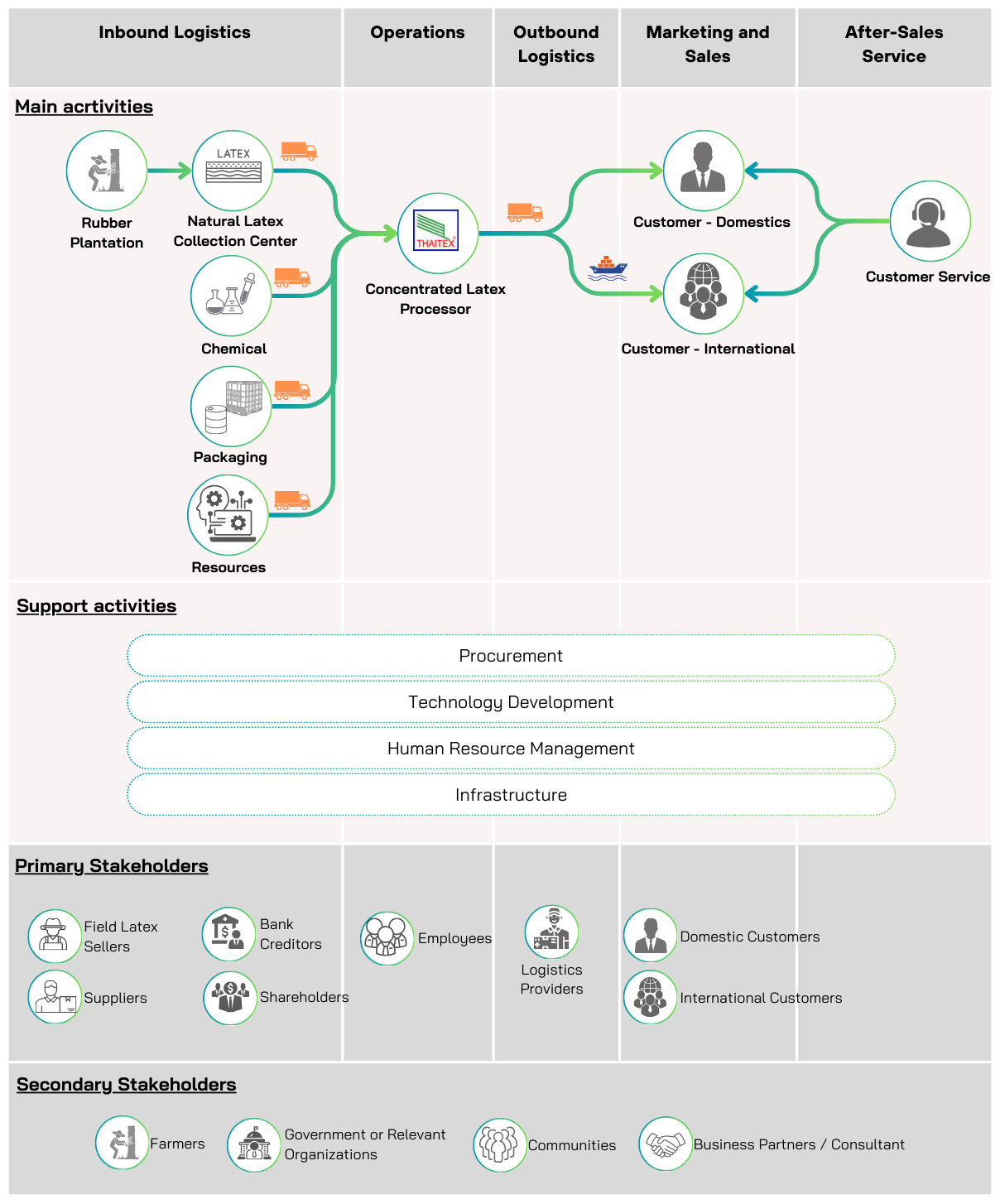
Activities in the value chain of the natural rubber latex processing business into concentrated latex form a system that connects various stakeholder groups, from upstream raw material production to industrial processing in factories, and downstream to product users in both domestic and international markets. These relationships are complex and directly impact the company's ability to operate continuously. Therefore, the company plans its operations responsibly to meet the expectations of both internal and external stakeholders for mutual maximum benefit.
(1) Input Factor Management
Activities for sourcing fresh latex, which is the main raw material for concentrated latex production. The security of raw material acquisition depends heavily on climatic and environmental factors that significantly impact fresh latex yield. Furthermore, there are sustainability conditions that must adhere to international principles, such as land use, human rights and labor standards, traceability to rubber plantation sources, and obtaining international operational certifications. These are all factors that the company must adapt to and plan its operations carefully. In addition to farmers, TRUBB also has Thai Rubber Land and Plantation Co., Ltd., a subsidiary responsible for delivering fresh latex, which has received FSC-FM certification in Phayao Province and Organic Rubber Plantation Standard certification in Mae Chan District, Chiang Rai Province.
Certifications for input factor management that the company has already implemented include Sustainable Rubber Plantation Standard, Organic Rubber Plantation (IFOAM), Organic Rubber Plantation (USDA), Sustainable Rubber Plantation Management Forest Stewardship Council - Forest Management (FSC-FM), and Global Organics Standard Latex.
Stakeholders in this chain include farmers, latex collectors, local government agencies, and local communities.
Key sustainability issues involved are Climate Change, Labor Rights, Human Rights, Traceability, Biodiversity, Supply Chain: Social, and Supply Chain: Environment.
(2) Product Manufacturing
Processing activities from fresh latex to concentrated latex are carried out through standardized production management. The company has experienced executives and employees in producing quality products. It complies with relevant laws, including environmental laws, labor laws, pollution management laws, and strictly adheres to occupational health and safety principles, etc. The company controls its operations to prevent negative impacts on the environment and local communities concerning air pollution, wastewater, and production waste. Resources are managed judiciously, such as water management based on the 3R principles, planning the use of solar energy in the production process, installing efficient wastewater treatment systems, and strictly adhering to occupational health and safety practices. Environmentally friendly packaging is used.
Certifications for the company's operational management include ISO9001, ISO14001, IEC17025 (Standard Lab), Green Industry, Global Organics Standard, and Forest Stewardship Council - Chain of Custody (FSC-COC).
Relevant stakeholders include employees, contractors, regulatory bodies, and communities surrounding the factory.
(3) Product Delivery and Distribution
TRUBB maintains and delivers quality and valuable products to customers through efficient transportation and distribution systems. Products are delivered according to customer-specified schedules. Transportation routes are planned for maximum effectiveness. Goods are transported both ways (round trip) to reduce empty runs, as well as managing potential impacts on society, the environment, and communities arising from the transportation process.
Relevant stakeholders include transportation service providers.
(4) Marketing and Sales
TRUBB delivers valuable and high-quality products to customers through efficient distribution channels. The company publicizes and communicates its responsibility for products, society, and the environment to customers. It builds good relationships with customers and listens to their opinions or suggestions, as well as cooperates with customers in providing information related to sustainability management, especially concerning Climate Change and Water Security.
Relevant stakeholders include domestic and international customers.
(5) After-Sales Service
TRUBB is responsible for customer and after-sales service by building relationships with customers, listening to and managing complaints and suggestions received from customers, considering appropriateness and feasibility to maintain a balance of expectations from various parties. The company studies and analyzes customer needs for the continuous development of products and new businesses. It conducts customer satisfaction surveys and manages the protection of customer personal data, as well as builds confidence for customers who choose to use the company's quality and valuable products as raw materials for their own production.
Relevant stakeholders include domestic and international customers.
Stakeholder Analysis
Introduction
TRUBB has identified stakeholders throughout the value chain with direct and indirect business relationships. Communication channels are provided to enable everyone to participate in providing feedback for developing sustainability strategies. This is beneficial for analyzing risks and opportunities to develop business value, increasing the ability to appropriately meet stakeholder expectations, with the goal of reducing negative impacts and promoting positive impacts on stakeholders to build sustainable relationships.
The Company prioritizes managing impacts and relationships with stakeholders throughout the value chain. Stakeholder analysis is therefore a crucial mechanism for understanding expectations, in order to determine appropriate response strategies and issues to be managed.
The Company has identified significant stakeholder groups based on their connection to value chain activities, the level of impact from business operations, and their influence on the ability to operate continuously. From the analysis of the Company's value chain, it is concluded that there are a total of 13 stakeholder groups, divided into 2 internal stakeholder groups and 11 external stakeholder groups, as shown in the following table.
Summary table of significant stakeholder groups in the value chain | ||
Value Chain Stages | Internal stakeholders | External stakeholders |
Upstream |
| |
Midstream |
|
|
Downstream |
| |
Cross-cutting |
|
|
Note: **Suppliers of chemicals and other production materials are part of the input procurement process before production. However, the Company has grouped them under the processing stage due to the direct connection of related issues with production process control, safety, and legal compliance.
Stakeholder Analysis
| Stakeholder Type | Stakeholders | Stakeholder Expectations | Response to Expectations | Communication Activities |
|---|---|---|---|---|
| External stakeholders | 2911 · Description: Raw material distributors | - Fair and consistent fresh rubber purchasing price
- Technological and knowledge support | - Trading price is based on daily market price
- Relevant educational activities are organized | 2941 · Description: Online Communication · 2949 · Other name: Group discussion at the latex purchasing station · Description: Others |
| External stakeholders | 2936 · Other name: Suppliers / Transportation Service Providers and Others · Description: Others | - Transparency in partner selection, considering mutual benefits
- Strict adherence to the 'Treatment of Partners' policy
- Collaborative development of suppliers according to international standards
- Appropriate payment terms as per contract | - Transparency in partner selection, considering mutual benefits
- Strict adherence to the 'Treatment of Partners' policy
- Collaborative development of suppliers according to international standards
- Appropriate payment terms as per contract | 2938 · Description: Visit · 2945 · Description: Complaint Reception · 2949 · Other name: Joint Activities · Description: Others |
| External stakeholders | 2894 · Description: Creditor | - Strict adherence to contractual terms
- Ability to fully repay debts as scheduled
- Treat all creditors fairly and equally | - Strictly comply with contractual terms and conditions
- Transparently disclose financial information | 2942 · Description: Internal Meeting · 2949 · Other name: Contact the Finance and Accounting Department Manager directly. · Description: Others |
| External stakeholders | 2913 · Description: Shareholders | - Conduct business transparently, in accordance with good corporate governance principles and business ethics.
- Able to operate in compliance with the European Union Deforestation Regulation (EUDR).
- Receive appropriate and fair returns on investment.
- Communicate and publicize the company's operations to the public. | - Has various committees and working groups as required by the Public Company Limited.
- Able to provide straightforward clarification on queries.
- The accuracy of the profit and loss statement is verified and certified by a third party.
- Strictly adheres to business ethics.
- Invests in new technologies to enhance management capabilities. | 2941 · Description: Online Communication · 2944 · Description: Annual General Meeting (AGM) · 2949 · Other name: Investor Relations Officer · Description: Others · 2949 · Other name: Online Feedback and Complaint Channels · Description: Others |
| Internal stakeholders | 2921 · Description: Employees | - Receive fair benefits and compensation.
- Receive skill development relevant to their role or as required.
- Opportunities for professional growth.
- Succession planning and employment stability.
- Workplace safety. | - Standards for wages and benefits are equivalent to those in the same business group.
- Training is provided to develop skills according to job roles or necessity.
- Opportunities are provided for capable and prepared individuals to succeed vacant positions.
- Provision of personal protective equipment, and management of occupational health and safety, and the working environment.
- Development of workplace safety manuals. | 2941 · Description: Online Communication · 2946 · Description: Employee Engagement Survey · 2949 · Other name: Participation in relationship-building activities through various projects · Description: Others · 2949 · Other name: Opinions or suggestions are expressed through various channels, such as group meetings, suggestion boxes, direct meetings with supervisors, Email, Line, and Facebook. · Description: Others |
| External stakeholders | 2923 · Description: Customers | - Deliver products with correct quality, complete, and on time
- Respond to and resolve complaints quickly
- Operate in accordance with international standards for environmental management and human rights management
- Capable of operating in accordance with international trade conditions, such as EUDR | - Establish standard systems for production, inspection, and delivery in accordance with customer requirements or international standards.
- Participate in problem analysis with customers based on complaints.
- Establish a traceability system and comprehensive risk management in accordance with EUDR conditions. | 2938 · Description: Visit · 2947 · Description: Satisfaction Survey · 2949 · Other name: Invest in new technologies to enhance competitive capability in international markets. · Description: Others |
| External stakeholders | 2893 · Description: Farmers | - Fair raw latex purchasing price
- Consistency in trading
- Receiving knowledge and technological support to apply in rubber production for improved quality that meets market demand
- Participation in community development | - Purchase and sale prices are referenced to daily market prices.
- Relevant educational activities are organized.
- A joint committee is established or meetings are held to gather opinions and suggestions.
- Training is provided on rubber cultivation techniques.
- Maintenance, and yield enhancement.
- Support for various community projects. | 2945 · Description: Complaint Reception · 2949 · Other name: Communicate through farmer representatives / latex collection points · Description: Others |
| External stakeholders | 2931 · Description: Government agencies and Regulators | - Strictly comply with the requirements of laws and various regulations, whether mandated by government, the United Nations, or the community.
- Participation in environmental care and community development. | - Understand and strictly comply with laws and regulations.
- Adhere to the requirements of the corporate code of ethics. | 2941 · Description: Online Communication · 2945 · Description: Complaint Reception · 2949 · Other name: Participate in meetings with government agencies to discuss and exchange views. · Description: Others |
| External stakeholders | 2902 · Description: Community · 2928 · Description: Society | - Conduct business ethically, without creating negative impacts on communities and the environment.
- Promote and develop the local economy to enhance well-being, create employment, and foster stability.
- Provide care and assistance to communities, schools, temples, and religious institutions as circumstances require. | - Assessment of various impacts from business operations
- Importing modern machinery for production to reduce environmental impact
- Employing local community members as staff
- Implementing the "Thai Rubber to Alleviate Poverty" project to generate income for schools in the community
- Providing training in rubber tapping and rubber plantation maintenance | 2945 · Description: Complaint Reception · 2949 · Other name: Responsible individuals are assigned to engage in listening to community problems and complaints, and to participate in various activities. · Description: Others |
| External stakeholders | 2900 · Description: Business partners | - Possesses capital for the research and development of new products.
- Reputation and achievements are recognized in relevant business/academic circles, enabling the integration of mutual benefits. | - Allocate budget for new innovative research projects.
- Showcase achievements or projects through the annual sustainability report and the Company's website. | 2949 · Other name: Research and Development Project for Concentrated Latex Products in collaboration with King Mongkut's University of Technology Thonburi · Description: Others |
Environmental Sustainability — Overview
Operating Results — Introduction
Environmental Standards
To ensure that fundamental environmental operations comply with international standards, TRUBB has implemented the ISO 14001:2015 environmental management system for continuous environmental management. It has also set a goal that all concentrated latex factories must obtain ISO 14001 environmental management system certification.
In 2024, the following factories received environmental certifications:
Hat Yai Factory ISO 14001, Green Industry 3
Surat Thani Factory ISO 14001, Green Industry 3
Rayong Factory ISO 14001, FSC-COC, Green Industry 3
Chiang Rai Factory ISO 14001, Green Industry 1
Environmental Policy & Guidelines
Has an Environmental Policy
Yes
Policy Description
Thai Rubber Latex Group Public Company Limited recognizes the current environmental situation, which is considered severely critical and affects the quality of life of people in society and limited natural resources. Therefore, the Company has established an environmental management policy to serve as a guideline for managing environmental impacts arising from the Company's business operations and to align with the sustainable development policy, as follows:
1. Committed to complying with environmental legal requirements and other related laws.
2. Utilize energy judiciously and manage it for maximum efficiency, including the selection of clean energy or renewable energy to replace the use of fossil fuels.
3. Reduce the use of energy and chemicals that cause greenhouse gas emissions.
4. Utilize water judiciously and manage it for maximum efficiency, especially when sharing water sources with communities, water must be managed with good governance and consideration for community rights.
5. Dispose of industrial waste and wastewater correctly and efficiently, without affecting communities and the environment.
6. Manage solid waste and plastic waste correctly and efficiently, without affecting stakeholders and the environment.
7. Manage air pollution, water pollution, noise and vibration pollution, and hazardous waste pollution appropriately, without affecting stakeholders and the environment.
8. Promote an organizational culture that instills awareness of the value of energy and water consumption, protecting the environment, and preserving and restoring ecosystems and biodiversity.
Policy Document Link
https://www.thaitex.com/en/environment/environmental
Environmental Guidelines
| Guideline |
|---|
| Electricity Management |
| Fuel Management |
| Renewable/Clean Energy Management |
| Water Management |
| Waste Management |
| Biodiversity Management |
| Greenhouse Gas and Climate Change Management |
Environmental Policy Review
Policy Reviewed This Year
Yes
Energy — Plan & Guidelines
Has an Energy Management Plan
Yes
Plan Description
Energy Management
In managing energy, TRUBB has established guidelines for all employees to participate in energy conservation within the organization as follows:
1. Establish energy conservation as an integral part of the organization's operations.
2. Optimize the efficiency of the organization's energy resource utilization in alignment with business needs.
3. Establish an energy conservation plan and review and update it annually.
4. Energy conservation is the responsibility of management and employees at all levels of the company.
5. Provide support for personnel, budget, and training to enhance energy-related work.
6. Commit to complying with laws related to energy conservation and energy management.
Energy — Electricity Consumption
Introduction
2565 | 2566 | 2567 | 2568 | |
Ratio of total electricity consumption per total number of employees (kWh/person/year) | 20,319 | 18,658 | 17,191 | 17,615 |
Total electricity consumption per unit (kWh/ton/product) | 72.93 | 126.36 | 146.13 | 134.98 |
Electricity Consumption
| Metric | Current Year | Previous Year | Two Years Ago |
|---|---|---|---|
| Total electricity consumption within the organization (Kilowatt-Hours) | 9,970,253 | 10,865,207 | 12,650,400.57 |
| Electricity purchased for consumption from non-renewable energy sources (Kilowatt-Hours) | 9,573,208 | 10,778,197 | 12,650,400.57 |
| Electricity purchased or generated for consumption from renewable energy sources (Kilowatt-Hours) | 397,045 | 87,010 | 0 |
Energy — Fuel Consumption
Fuel Consumption
| Metric | Current Year | Previous Year | Two Years Ago |
|---|---|---|---|
| Crude oil (Barrels) | |||
| Coal (Metric tonnes) | |||
| Jet fuel (Litres) | |||
| Diesel (Litres) | 142,976 | 167,695.64 | 204,695.95 |
| Gasoline (Litres) | 16,206 | 18,418.86 | 18,539.48 |
| Fuel oil (Litres) | |||
| Natural gas (Standard cubic feet) | |||
| LPG (Kilograms) | 110,015 | 118,185 | 126,620.6 |
| Steam (Metric tonnes) |
Energy — Targets
Has Set Targets
Yes
Targets
| Target | Base Year | Base Year Value | Target Year | Target Change (%) | Unit |
|---|---|---|---|---|---|
| Reduction of electricity purchased for consumption | 2,023 | 126.36 | 2,030 | 15 | Kilowatt-hour |
| Increase of electricity consumption from renewable energy sources | 2,023 | 6,401 | 2,030 | 40 | Kilowatt-hour |
Energy — Performance & Outcomes
Has Performance Results
Yes
Performance Description
Project to utilize solar energy from solar cells to replace electricity, reducing the proportion of electricity generated from fossil fuels, which are a cause of greenhouse gas emissions from combustion, by increasing the proportion of renewable energy from solar power, thereby contributing to environmental preservation.
Target
2030: Proportion of electricity consumption from fossil fuels to solar energy = 60 : 40
Operational Plan
Solar cell installation at 5 work locations:
Head Office Building
Hat Yai Plant
Surat Thani Plant
Rayong Plant
Chiang Rai Plant
Operational Progress
Head Office Building: Installation completed since December 2023.
Hat Yai Plant: Planned for operation in 2026.
Surat Thani Plant: Planned for operation in 2026.
Rayong Plant: Installation completed, renewable energy utilization to commence in February 2025.
Chiang Rai Plant: Installation completed, renewable energy utilization to commence in January 2025.
Results of renewable energy utilization in 2025
Fossil fuel electricity consumption rate : Renewable energy = 90:10 (Calculated only for sites where renewable energy has commenced: Head Office, Rayong Plant, and Chiang Rai Plant).
Water — Plan & Guidelines
Has a Water Management Plan
Yes
Plan Description
In the production of concentrated latex, "water" is a highly critical production factor in the manufacturing process. As the world confronts changing climate conditions resulting in drought and water scarcity, the Company has established a sustainable water management approach. This approach is based on the 3Rs principle, aiming to oversee water resource utilization with utmost efficiency and to implement effective prevention and mitigation measures.
Water — Withdrawal, Discharge & Consumption
Water Withdrawal, Discharge & Consumption
| Metric | Current Year | Previous Year | Two Years Ago |
|---|---|---|---|
| Total water withdrawal (Cubic meters) | 281,198 | 316,729 | 348,869 |
| Total water withdrawal by third-party water (Cubic meters) | 2,110 | 2,043 | 35,914 |
| Total water withdrawal by surface water (Cubic meters) | 148,755 | 169,499 | 197,080 |
| Total water withdrawal by groundwater (Cubic meters) | 130,333 | 145,187 | 115,875 |
| Total water withdrawal by seawater (Cubic meters) | |||
| Total water withdrawal by produced water (Cubic meters) | |||
| Percentage of wastewater treated before discharge (%) | |||
| Total water discharge (Cubic meters) | |||
| Total water discharge to third-party water (Cubic meters) | |||
| Total water discharge to surface water (Cubic meters) | |||
| Total water discharge to groundwater (Cubic meters) | |||
| Total water discharge to seawater (Cubic meters) | |||
| Total water consumption (Cubic meters) | 281,198 | 316,729 | 348,869 |
| Recycled water (Cubic meters) | 12,266 | 8,078.4 | 18,864.2 |
Water — Targets
Introduction
Goals
Reduce water resource consumption by 8% by 2026.
No risk of water resource scarcity.
100% internal water recirculation.
Do not discharge water into public water sources.
Sustainable water management guidelines, applying the principles of Reduce, Reuse, Recycle
Freshwater Management
Establish raw water reserves to store water for use during water scarcity crises.
Monitor water situations and assess risks of water resource scarcity.
Reduce the amount of raw water drawn for use; treat and recirculate water for factory use.
Utilize innovation and technology to enhance efficiency in water resource utilization for maximum benefit.
Control and monitor the quantity of raw water used for production.
Wastewater Management
versee wastewater management to meet standard values according to environmental laws and regulations.
Treat wastewater, focusing on recirculation for reuse within the factory.
100% no discharge of water into community water sources.
Utilize technology to enhance the efficiency of water resource treatment.
Community Relations
Establish cooperation with external agencies to maintain water sources around the factory area.
Coordinate with local communities, providing support for the development and improvement of community water sources.
Has Set Targets
Yes
Targets
| Target | Base Year | Target Year | Target Change (%) | Unit |
|---|---|---|---|---|
| Reduction of water withdrawal | 2,023 | 2,026 | 8 | Cubic meters |
Water — Performance & Outcomes
Has Performance Results
Yes
Performance Description
Wastewater Management
Operational Guidelines
Continuously monitor and control the wastewater treatment system to ensure its efficiency, so that the quality of the treated water meets the specified standards. Develop the wastewater treatment system to achieve maximum efficiency, enabling the highest possible reuse of water. Utilize the treated water for irrigation in the company's rubber plantations.
Operational Results
Wastewater from the factory is treated, and the quality of the treated water meets the standards set by the Department of Industrial Works and has passed inspection by the Provincial Industry Office. The treated water is reused for purposes such as cleaning premises and watering plants.
Waste Management — Overview
Introduction
Waste and refuse generated from business operations are a responsibility that TRUBB must manage in accordance with legal regulations. The waste and refuse generated from TRUBB's business activities can be classified into 3 types that require proper management before being disposed of outside the factory, as follows:
Hazardous waste from the production of concentrated latex and skim rubber, including rubber starch residue and various chemical packaging.
Non-hazardous waste, including household waste.
Wastewater from production, including wastewater and sludge from treatment ponds.
Waste — Plan & Guidelines
Has a Waste Management Plan
Yes
Plan Description
THAITEX's waste and refuse disposal guidelines for each type.
Hazardous waste that must be disposed of only as required by law.
Type: Hazardous waste generated from product manufacturing, such as rubber starch residue and wastewater treatment sludge.
Management: Collect and send for disposal at legally certified hazardous waste disposal sites, correctly.
Type: Hazardous waste, such as packaging and various chemicals.
Management: Collect and send for disposal at legally certified hazardous waste disposal sites, correctly.
Non-hazardous waste.
Type: Non-recyclable waste.
Management: Deliver to the municipality for disposal by landfill or incineration, depending on the readiness to accommodate waste management in each area.
Type: Recyclable waste.
Management: Donate for a community waste-collection project or sell to buyers for recycling and reuse in factories, such as beverage bottles used as equipment for testing latex concentration or equipment for cleaning factory tools.
Type: Food waste, organic waste, wet waste.
Management: Use for animal feed or create green cones for composting, collect, and deliver to the municipality for disposal.
Waste — Generation, Disposal & Recycling
Waste Generation, Disposal & Recycling
| Metric | Current Year | Previous Year | Two Years Ago |
|---|---|---|---|
| Total waste generated (Kilograms) | 66,384 | 108,725.16 | 82,463.4 |
| Non-hazardous waste (Kilograms) | 65,634 | 107,945.16 | 82,172.4 |
| Non-hazardous waste - Landfilling (Kilograms) | 64,547 | 106,495.46 | 79,946 |
| Non-hazardous waste - Incineration (with energy recovery) (Kilograms) | |||
| Non-hazardous waste - Incineration (without energy recovery) (Kilograms) | 1,087 | 1,449.7 | 2,226.4 |
| Non-hazardous waste - Other disposal operations (Kilograms) | |||
| Hazardous waste (Kilograms) | 750 | 780 | 291 |
| Hazardous waste - Landfilling (Kilograms) | |||
| Hazardous waste - Incineration (with energy recovery) (Kilograms) | |||
| Hazardous waste - Incineration (without energy recovery) (Kilograms) | |||
| Hazardous waste - Other disposal operations (Kilograms) | 750 | 780 | 291 |
| Total reused/recycled waste (Kilograms) | 4,331 | 3,871.4 | 4,618.7 |
| Reused/Recycled non-hazardous waste (Kilograms) | 4,331 | 3,871.4 | 4,618.7 |
| Reused non-hazardous waste (Kilograms) | |||
| Recycled non-hazardous waste (Kilograms) | 4,331 | 3,871.4 | 4,618.7 |
| Reused/Recycled hazardous waste (Kilograms) | |||
| Reused hazardous waste (Kilograms) | |||
| Recycled hazardous waste (Kilograms) |
Waste — Targets
Introduction
Goals
2030: Zero waste to landfill
Operational Guidelines
Campaign to raise employee awareness of the impacts of waste, refuse, and pollution.
Adhere to the 3R waste management principles (Reduce, Reuse, Recycle) to minimize waste and refuse.
Improve production processes to minimize waste generation.
Manage hazardous waste as legally prescribed, from internal storage to external disposal outside the factory.
Regularly install, control, and inspect wastewater management systems, ensuring no discharge into public areas.
Prepare reports on waste segregation by type and utilization.
Has Set Targets
Yes
Targets
| Waste Type | Disposal Approach | Target | Base Year | Target Year | Target Year Value | Target Change (%) | Unit |
|---|---|---|---|---|---|---|---|
| Non-hazardous waste | 2759 · Description: Recycle · 2763 · Other name: to be utilized for other societal benefits · Description: Other | Reduce waste volume | 2,023 | 2,030 | 0 | 100 | Kilograms |
Waste — Performance & Outcomes
Has Performance Results
Yes
Performance Description
In 2025, the amount of non-hazardous waste and hazardous waste can be reduced in accordance with the established operational guidelines.
GHG — Plan & Guidelines
Has a GHG Management Plan
Yes
Plan Description
To continuously reduce greenhouse gas emissions, become a part of mitigating the impacts of climate change on business activities, and demonstrate participation in reducing greenhouse gas emissions by 2030, in accordance with United Nations guidelines.
GHG — Emissions
Introduction
In 2025, the Chonburi factory is excluded from the scope of calculation due to the relocation of its production base to the Rayong factory.
GHG Emissions
| Metric | Current Year | Previous Year | Two Years Ago |
|---|---|---|---|
| Total GHG emissions (Metric tonnes of carbon dioxide equivalent) | 18,598 | 19,068 | 20,467 |
| Total greenhouse gas emissions 1 (Metric tonnes of carbon dioxide equivalent) | 1,015 | 1,164 | 1,069 |
| Total greenhouse gas emissions 2 (Metric tonnes of carbon dioxide equivalent) | 4,633 | 5,389 | 6,324 |
| Total greenhouse gas emissions 3 (Metric tonnes of carbon dioxide equivalent) | 12,950 | 12,515 | 13,074 |
GHG — Emissions Verification
Emissions Verified by a Third Party
Yes
Verifying Body
3180
Verification Document Link
https://eonemedia.setlink.set.or.th/report/0249/2025/1770686787817.pdf
GHG — Principles & Standards
Principles & Standards Applied
| Standard |
|---|
| 2671 |
GHG — Targets
Introduction
To continuously reduce greenhouse gas emissions, participate in mitigating the impacts of climate change on business activities, and demonstrate commitment to reducing greenhouse gas emissions by 2030 (2030 AD) in accordance with United Nations guidelines.
Goals
2030: Carbon Neutral (2030 AD)
2050: Net Zero (2050 AD)
To manage greenhouse gas emissions towards Net Zero by 2050 (2050 AD) in accordance with the United Nations' cooperation, it is essential to identify the sources of emissions from business operations. This information will serve as a basis for planning emission source management to mitigate the impacts of climate change. Therefore, TRUBB has identified key projects that must be managed to help achieve this goal in the future.
Has Set GHG Targets
Yes
GHG Targets — Net Zero
Net Zero Targets
| Emission Scope | TGO Certification | Base Year | Base Year Emissions | Near-term Target Year | Near-term Target Value | Near-term Target Change (%) | Long-term Target Year | Long-term Target Value | Long-term Target Change (%) | Target Year | Target Year Emissions | Target Change (%) | Unit |
|---|---|---|---|---|---|---|---|---|---|---|---|---|---|
| 2717 | Net zero pathway | 2,023 | 20,467 | 2,030 | 14,327 | 30 | 2,050 | 12,280 | 40 | 2,030 | 14,327 | 30 | Metric tonnes of carbon dioxide equivalent |
GHG Targets — Carbon Neutrality
Carbon Neutrality Targets
| Emission Scope | Carbon Neutrality Certified | Certifying Body | Base Year | Base Year Emissions | Target Year | Target Year Emissions | Target Change (%) | Unit |
|---|---|---|---|---|---|---|---|---|
| 2716 | Y | Thailand Greenhouse Gas Management Organization | 2,023 | 20,467 | 2,030 | 14,327 | 30 | Metric tonnes of carbon dioxide equivalent |
GHG — Performance & Outcomes
Has Performance Results
Yes
Performance Description
The company has been certified for its organizational carbon footprint by the Energy and Ecological Economics Management Research Unit, Chiang Mai University, from 2023 to the present, with the following reporting scope:
Scope 1
Greenhouse gas emissions from stationary combustion, including fuel/LPG for machinery and lawnmowers.
Greenhouse gas emissions from mobile combustion, including cars, trucks, forklifts, and dumpers.
Greenhouse gas emissions from fugitive emissions and others (Fugitive Emission), including refrigerants, septic tank systems, and industrial waste disposal.
Scope 2
Purchase of electricity from external sources
Scope 3
Indirect greenhouse gas emissions from purchased raw materials (Purchased goods and services)
Indirect greenhouse gas emissions from fuel- and energy-related activities (Fuel- and energy related activities)
Indirect greenhouse gas emissions from upstream transportation and distribution (Upstream transportation and distribution)
Indirect greenhouse gas emissions from downstream transportation and distribution (Downstream transportation and distribution)
Environmental Legal Incidents
Legal Violation Incidents
| Metric | Current Year | Previous Year | Two Years Ago |
|---|---|---|---|
| Number of cases or incidents of legal violations or negative environmental impact (cases) | 0 | 0 | 0 |
Other Environmental Management
Introduction
Air Pollution Management
The production process of concentrated latex and skim rubber involves heating and chemical mixing as part of the manufacturing stages. TRUBB prioritizes the quality of air released into the public and controls chemical odors to prevent adverse impacts on communities surrounding the factory. This is achieved by focusing on air quality management and control both inside and outside the factory, as well as consistently monitoring and tracking air quality. This ensures that TRUBB's product manufacturing does not cause pollution affecting society, in accordance with legal requirements.
Human Rights Due Diligence
Conducts Human Rights Due Diligence
Yes
Due Diligence Description
Human Rights Due Diligence Report
Human Rights Due Diligence Framework
Thai Rubber Latex Group Public Company Limited has established a Human Rights Due Diligence process as part of its ongoing enterprise risk management framework. The Company conducts human rights risk assessments to identify preventive and mitigation measures aimed at minimizing potential human rights impacts arising from its business operations throughout the entire value chain.
The Company’s Human Rights Due Diligence process is aligned with the principles set out in the United Nations Guiding Principles on Business and Human Rights (UNGPs), which are based on the following three pillars, Protect: The State has the duty to protect against human rights violations by state agencies or third parties, including business enterprises, Respect: Organizations and individuals, particularly business enterprises, have the responsibility to respect human rights, Remedy: Where human rights violations occur, the State must ensure access to appropriate remedies. Business enterprises are also expected to establish grievance mechanisms and provide or cooperate in remediation processes when violations arise, whether individually or collectively through business associations (Ruggie, 2011).
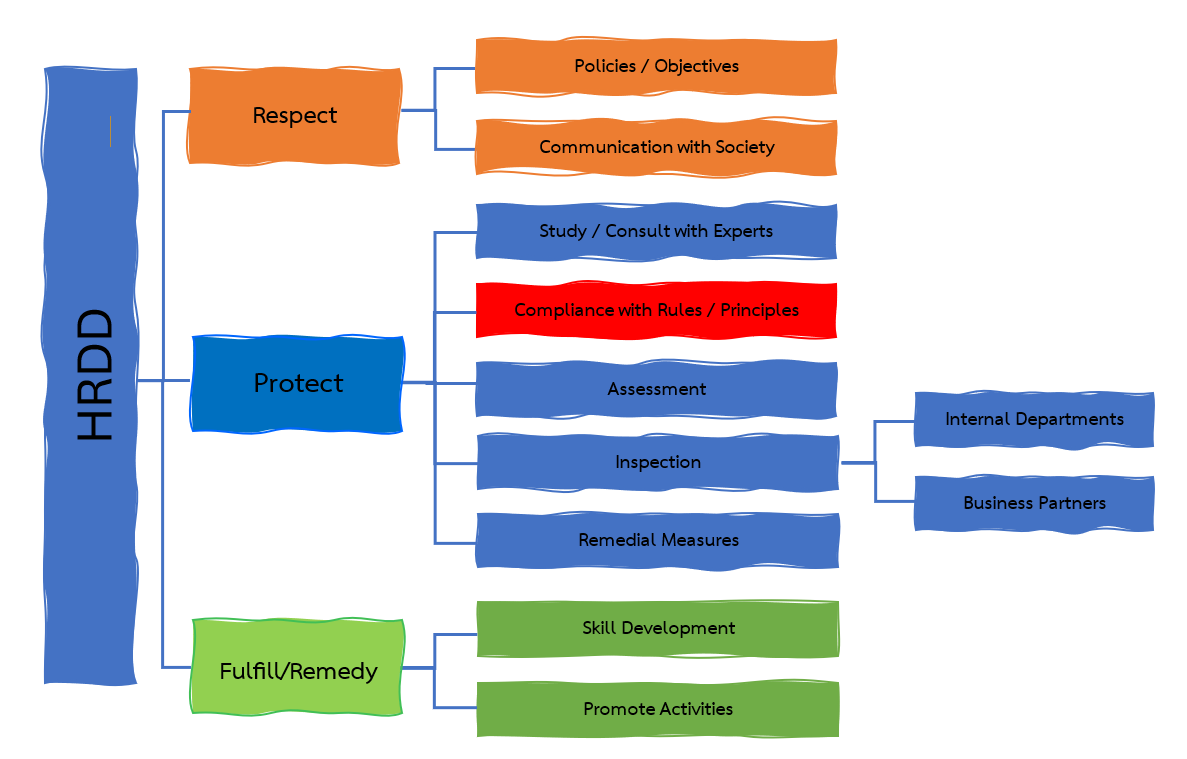
Human Rights Due Diligence Process
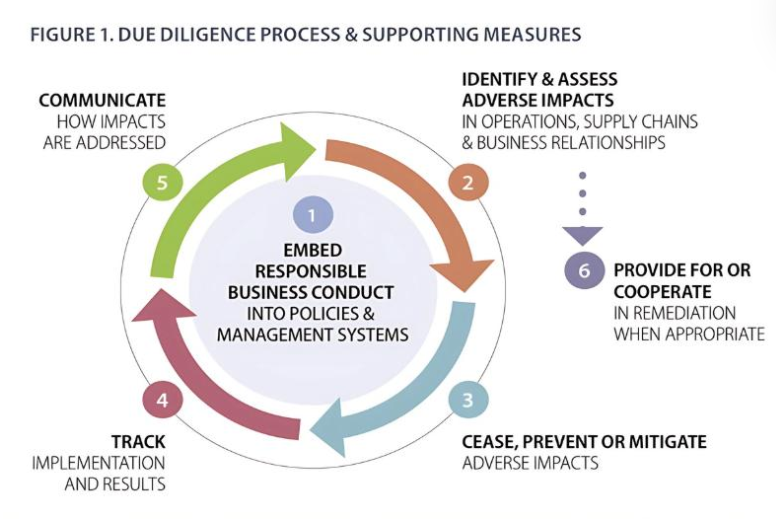
The Company has summarized its Human Rights Due Diligence (HRDD) process, in line with the aforementioned framework, into six key steps for implementation as follows:
1. Human Rights Policy
Thai Rubber Latex Group Public Company Limited is committed to conducting its business with sustainable growth by upholding social responsibility toward all stakeholder groups in accordance with good corporate governance principles and the Company’s Code of Conduct. The Company recognizes the importance of respecting human rights in strict compliance with applicable laws and international standards to prevent any actions that may cause human rights violations or adverse impacts throughout the business value chain.
The Executive Committee has therefore established the Human Rights Policy with the following commitments:
Directors, executives, and employees shall respect and comply with applicable laws, regulations, codes of practice, international declarations, treaties, and labor standards relating to the protection of human rights at both national and international levels.
The Company adopts and aligns its operations with the principles set forth in the Universal Declaration of Human Rights (UDHR), the United Nations Guiding Principles on Business and Human Rights (UNGPs), and the International Labour Organization Declaration on Fundamental Principles and Rights at Work.
All stakeholders throughout the business value chain shall be treated equally and fairly, without discrimination.
The Company supports communication and awareness-building on human rights and its Human Rights Policy among stakeholders through the Company’s communication channels.
A responsible unit is designated to oversee, monitor, and regularly assess human rights risks and impacts, establish appropriate risk management measures, and provide mitigation or remediation processes in cases where violations occur.
Employees and stakeholders are encouraged to express opinions, report concerns, or submit complaints regarding potential human rights violations. The Company ensures fairness and protection for whistleblowers.
A fact-finding committee shall be appointed to investigate alleged violations. Individuals found to have committed violations, upon thorough investigation, shall be subject to disciplinary action in accordance with Company regulations and, where applicable, legal proceedings.
The Company maintains occupational safety, health, and working environment standards to prevent accidents, injuries, and work-related illnesses.
The Company reports its human rights performance through the Sustainable Business Development Report, Sustainability Report, and the Company’s sustainability website.
The Company respects and protects the personal data of stakeholders throughout the business value chain.
2. Identification of Issues and Impact Assessment
2.1 Scope Determination
The Company has defined the scope of its Human Rights Due Diligence (HRDD) to cover all stakeholder groups directly and indirectly involved in its business operations, including vulnerable groups such as children, persons with disabilities, women, minorities, migrant workers, third-party contracted workers, local communities, ethnic groups, the elderly, LGBTQ+ individuals, and pregnant women. The scope encompasses all operational areas under the Company’s control as well as activities throughout the supply chain, with the following process steps:
2.1.1 Value Chain Mapping
Core Activities | |||||||
Input Management | Operations | Logistics and Transportation | Marketing and Sales | After-Sales Service | |||
- Implement responsible procurement and raw material sourcing practices - Establish sustainable rubber plantation standards - Organic rubber plantations certified by International Federation of Organic Agriculture Movements (IFOAM) - Organic rubber plantations certified by United States Department of Agriculture (USDA) - Sustainable rubber plantation management under Forest Stewardship Council – Forest Management (FSC-FM) - Global Organics Standard Latex - Sourcing fresh latex from deforestation-free supply chains | - Process raw materials and utilize environmentally friendly packaging - Maintain production quality management in accordance with international standards, including: - Forest Stewardship Council - Chain of Custody (FSC-COC) - Global Organics Standard Latex - ISO9001 - ISO14001 - ISO17025 - Implement sustainable environmental management practices - Address climate change and manage greenhouse gas emissions - Manage waste effectively - Manage water resources responsibly - Manage energy consumption efficiently | - Manage product delivery in accordance with customer-specified timelines - Optimize transportation route planning for maximum efficiency - Manage environmental and social impacts arising from transportation processes | - Establish appropriate and fair pricing strategies - Deliver products that meet established quality standards - Develop distribution channels to effectively reach customers both domestically and internationally | - Product warranty and customer satisfaction assurance - Continuous development of strong customer relationships, with dedicated departments and personnel responsible for customer care - Direct channels for customer feedback and product-related suggestions | |||
Support activities | |||||||
Procurement | Technology management | Human resource management | Infrastructure | ||||
- Establish fair procurement regulations and procedures - Announce and enforce a Supplier Code of Conduct - Implement sustainable supply chain management by integrating ESG assessment criteria into procurement processes | - Implement research and development (R&D) and innovation projects to enhance product value in alignment with the Bio-Circular-Green (BCG) Economy Model - Manage intellectual property rights effectively - Apply Artificial Intelligence (AI) technologies in management and operational processes | - Ensure fair labor practices in accordance with human rights principles - Promote employee capability development - Conduct fair recruitment, selection, and compensation management - Safeguard employee well-being, occupational health, and workplace safety - Provide appropriate employee welfare and benefits - Conduct comprehensive Human Rights Due Diligence assessments | - The organization has the necessary structure and resources to achieve its goals. | ||||
2.1.2 Identifying the Value Chain
2.1.3 Value Chain Prioritization
Operations: The processing of fresh latex into standardized concentrated latex (e.g., DRC ≥ 60%) requires strict quality control at every stage, including impurity separation, tank cleanliness, and contamination prevention. This process represents the core of the business and directly affects productivity, product quality, and cost efficiency.
Input Management: The quality of raw latex sourced from rubber plantations significantly determines production costs and final product quality. Supporting smallholder farmers (e.g., through cooperatives) and sourcing latex through transparent procurement channels help reduce supply risks. As the starting point of the value chain, this activity directly impacts farmers and overall value creation.
Human Resource Management: Labor plays a critical role in both production and quality control processes. Employing local workers and providing appropriate welfare benefits help reduce employee turnover, enhance corporate reputation, and promote local community development. This contributes to workforce stability, corporate image, and long-term sustainability.
Procurement: Sourcing raw materials from certified and responsible sources, such as those certified by the Forest Stewardship Council (FSC) or from deforestation-free supply chains, strengthens the Company’s ESG positioning and builds customer confidence, particularly in export markets. This directly impacts sustainable sourcing practices and supply chain management.
Technology Management: The adoption of automated machinery (e.g., centrifugal separation systems) and real-time monitoring systems enhances quality control, reduces waste, and improves energy efficiency. This strengthens operational efficiency and competitiveness.
Marketing and Sales: The concentrated latex market is highly competitive and primarily operates under a B2B model. Building long-term relationships with buyers, such as rubber glove manufacturers, and emphasizing sustainability as a value proposition enhance differentiation. This activity directly connects business operations with revenue generation and customer retention.
Logistics and Transportation: Latex is a perishable product requiring strict control of temperature and delivery timelines. Efficient logistics systems help reduce costs and product losses while ensuring effective and timely delivery performance.
After-Sales Service: Although not a primary value driver, responsive handling of product quality concerns and service-related complaints strengthens long-term customer relationships and supports customer retention, thereby generating added value through customer satisfaction.
Infrastructure: Factory systems, backup energy supply, ERP systems, environmental management systems, and internal control mechanisms form the foundation supporting all value chain activities. These elements ensure that operations are carried out efficiently, reliably, and in alignment with sustainability objectives.
Business Importance | Effect | ||
High | Medium | Low | |
High |
|
|
|
Medium |
|
|
|
Low |
| ||
2.1.4 Identifying stakeholder groups
Stakeholders | Environment | Labor | Other important human rights |
Fresh latex seller | / | Right to fair income; right to equal access to markets; community rights/right to livelihood. | |
Suppliers / transportation providers and others | / | / | Workers’ rights to safe working conditions; non-discrimination; right to communication and grievance mechanisms; environmental rights and transportation safety. |
Bank creditor | Right to transparent information; risk of indirect human rights impacts through investment. | ||
Shareholders/Investors | Right to access information; right to transparent returns; and non-involvement in human rights violations by the company. | ||
Employee | / | / | Right to safe working conditions; right to fair wages; rights to welfare, health, freedom of association, and privacy. |
Customer | / | Right to accurate product information; product safety; consumer rights. | |
Farmer | / | / | Right to fair sale of products; protection from exploitation through contractual systems; access to transparent markets and pricing. |
Government sector / Other agencies | / | / | Right to participation; right to information; and environmental and labor governance in accordance with the law. |
Community/Society | / | Right to a safe environment; access to local resources; transparency in the event of impacts from factory operations. | |
Business partners / consultants | Right to equitable agreements; non-discrimination; access to the company’s policy information. |
2.2 Identification of Relevant Human Rights Issues
The Company has conducted a review and assessment of potential human rights issues that may arise throughout its value chain, covering both the Company’s core business activities and activities carried out by business partners, such as suppliers, contractors, and joint venture partners. The objective is to identify risks that may directly or indirectly result in human rights violations. Relevant departments are assigned to jointly assess such risks and report the findings to the ESG Working Committee or the relevant governance committee in accordance with the established reporting hierarchy.
In addition, the Company applies the Human Rights Due Diligence guidelines for listed companies issued by the Securities and Exchange Commission Thailand (SEC Thailand) as the foundation for developing its Human Rights Impact Assessment (HRIA) checklist. The HRIA is conducted annually to identify material human rights issues through a risk prioritization process, taking into account both the likelihood and severity of impacts, as well as the Company’s current mitigation measures. Under this framework, risk levels refer to risks to the Company arising from human rights issues. Human rights risks affecting the Company are categorized into four levels.
Level | Risk type | Meaning |
4 | Highest level of risk | The risk that the company may become a violator of applicable Thai laws already binding on the company, such as the use of forced labor or emissions exceeding legal limits. |
3 | High level of risk | The risk that the company’s operations may not align with international standards within the industry in which it operates standards that business partners prioritize without necessarily constituting a violation of Thai law, such as marketing communications containing content inappropriate for children or content that undermines the dignity of certain groups, or failure to respect the rights of minority stakeholders within the value chain. |
2 | Medium Level risk | The risk that the company may suffer reputational and image damage as a result of operations that negatively impact human rights within the value chain, leading to reduced acceptance by society or the communities in which the company operates. |
1 | Low level of risk | The risk that the company may lose opportunities to build and further enhance its positive corporate image due to failure to take additional actions to create added value and demonstrate its commitment to sustainability. |
In 2025, the Company conducted its Human Rights Impact Assessment (HRIA) in accordance with the SEC Thailand guidelines and identified the following human rights risk issues for prioritization:
2.2.1 Comprehensive Environmental Due Diligence
Code | Issue | Issues that remain unresolved and lack clear action | Risk level |
EN 1-1 | Water management | No systemic impact assessment of water usage has been conducted. | Medium |
EN 1-2 | Waste and refuse management | No Zero Waste target has been established for the production process, nor has a comprehensive environmental assessment been carried out. | Medium |
EN 1-3 | Energy Management | There is no clean energy policy or energy reduction initiative in the production process. | Medium |
EN 1-5 | Hazardous Materials Management | There is no emergency response plan or public risk reporting. | High* |
EN 2-1 | Impact on Biodiversity | There has been no assessment of impacts on plant and animal species. | Medium |
EN 2-2 | Impact from Climate Change | There is no GHG inventory or climate adaptation plan addressing the company’s employees, communities, and other stakeholders. | High* |
Remarks: * Significant
2.2.2 Comprehensive labor rights due diligence
Code | Section | Issues that remain unresolved and lack clear action | Risk level |
LA 1-1 | Freedom of Association and Collective Bargaining | There is no labor union or formal collective bargaining mechanism. | High* |
LA 1-2 | Elimination of Forced Labor | There is no supplier monitoring system regarding forced labor. | High* |
LA 1-3 | Abolition of Child Labor | There is no surveillance plan in cases involving outsourced/subcontracted labor. | Low |
LA 1-4 | Elimination of Discrimination | No activities or mechanisms have been identified to monitor workplace discrimination. | Medium |
LA 2-1 | Occupational Health and Safety | There are no accident reduction targets, activities to reduce work-related accidents, or clear KPI tracking. | High* |
LA 2-2 | Welfare and Social Security | There is a lack of continuous communication activities regarding labor rights. | Medium |
LA 2-3 | Participation and Transparency | There is no disclosure of the level of utilization of the grievance mechanism. | Medium |
Remarks: * Significant
2.2.3 Comprehensive Human Rights Due Diligence (Other Aspects)
Code | Section | Issues that remain unresolved and lack clear action | Risk level |
HR 1-1 | Gender Equality | There are no concrete outcome measurements or D&I KPIs in place. | Medium |
HR 1-2 | Health and Safety Rights | No data yet on risk reduction targets from partners or follow-up results. | High* |
HR 1-3 | Personal Data Protection Rights (PDPA) | There is no clearly designated DPO or internal audit system regarding PDPA. | High* |
HR 2-1 | Rights of local communities | There is no impact assessment system for new projects on communities. | High* |
HR 2-2 | Rights of minorities | There is no assessment of the specific needs of vulnerable groups. | Medium |
HR 2-3 | Intellectual property rights | There is no partner audit system or ownership verification for jointly developed innovations. | Medium |
HR 2-4 | Children’s rights (beyond child labor) | There is no collaboration plan with local authorities regarding children’s rights. | Medium |
HR 2-5 | Rights of persons with disabilities | There are no workplace accommodations or mechanisms to receive feedback from persons with disabilities. | High* |
Remarks: * Significant
2.3 Prioritizing risk issues
Based on the Company’s assessment of material human rights issues, the Company will use the results in accordance with the guideline manual to prioritize significant human rights risk issues. The prioritization is determined by considering two key factors: (1) the likelihood of occurrence, and (2) the severity of impact in the event that an actual human rights violation occurs. Such risks are classified into five levels: Very Low, Low, Medium, High, and Very High. This prioritization enables the company to appropriately define risk management guidelines and mitigation measures, consistent with the nature and magnitude of the risks, and to continuously monitor and evaluate their effectiveness.
Likelihood refers to the assessment of the frequency or probability that a risk may occur, It is classified into five levels:
Likelihood Level | Description |
Level 5 – Very High Likelihood | The incident occurs frequently within the operational area (more than 6 times per year). |
Level 4 – High Likelihood | The incident occurs several times per year within the operational area (4–6 times per year). |
Level 3 – Moderate Likelihood | The incident occurs occasionally within the operational area (2–3 times per year). |
Level 2 – Low Likelihood | The incident rarely occurs within the operational area but remains possible (once per year). |
Level 1 – Very Low Likelihood | The incident occurs in the same industry type as the operational area, but it is unlikely to occur within the operational area (once every 2–3 years). |
Impact refers to the assessment of the severity of damage that may occur if the risk materializes. It is classified into five levels:
Impact Level | Description |
Level 5 – Very High Impact |
|
Level 4 – High Impact |
|
Level 3 – Moderate Impact |
|
Level 2 – Low Impact |
|
Level 1 – Very Low Impact |
|
Risk Severity Assessment
The overall severity of each risk factor is determined by combining the likelihood and impact dimensions. The severity score of each risk factor is calculated as the product of the likelihood level and the impact level.
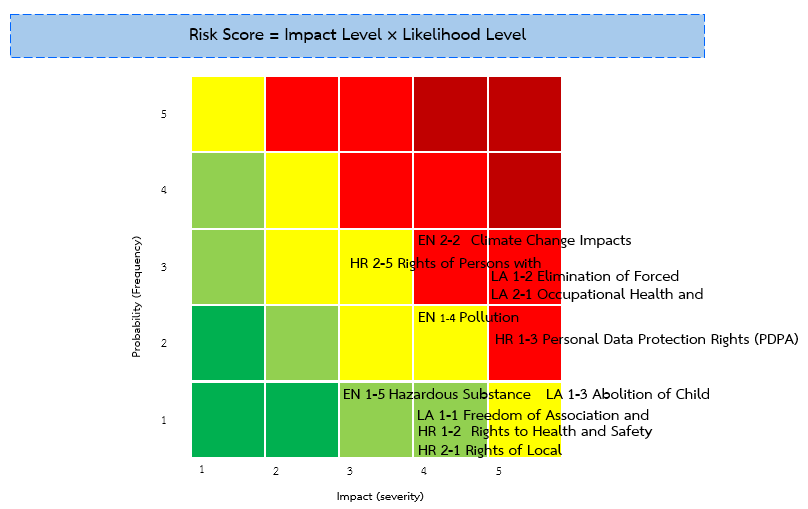
Very High (20–25 points)
The company must immediately suspend the activity if the risk involves severe human rights violations, while promptly implementing impact mitigation measures and stringent control measures.
High (10–20 points)
The company must implement proactive risk control measures and closely monitor impacts to prevent the risk from escalating to a severe level.
Medium (5–9 points)
The company must establish risk control measures and regularly monitor the situation. The risk may occur but remains at a manageable impact level.
Low (3–4 points)
The company should implement standard risk control measures and collect data for monitoring and reviewing risk situations.
Very Low (1–2 points)
The risk is at an acceptable level. The company already has control or preventive measures in place, and there is no tendency for the risk to become more severe.
Human rights issues that have been assessed for importance
Code | Section | Impact (Severity) | Impact (Severity) | Risk Score |
EN 1-4 | Pollution Management | 4 | 2 | 8 |
EN 1-5 | Hazardous Substance Management | 3 | 1 | 3 |
EN 2-2 | Climate Change Impacts | 4 | 3 | 12* |
LA 1-1 | Freedom of Association and Collective Bargaining | 4 | 1 | 4 |
LA 1-2 | Elimination of Forced Labor | 5 | 3 | 15* |
LA 1-3 | Abolition of Child Labor | 5 | 1 | 5 |
LA 2-1 | Occupational Health and Safety | 5 | 3 | 15* |
HR 1-2 | Rights to Health and Safety | 4 | 1 | 4 |
HR 1-3 | Personal Data Protection Rights (PDPA) | 5 | 2 | 10* |
HR 2-1 | Rights of Local Communities | 4 | 1 | 4 |
HR 2-5 | Rights of Persons with Disabilities | 3 | 3 | 9 |
3. Mitigation and Preventive Measures
Upon completing the assessment and prioritization of human rights risks, Thai Rubber Latex Group Public Company Limited determines appropriate control, mitigation, and preventive measures to address risks that may arise from its operations or supply chain activities. Particular attention is given to risks categorized as high or very high. In such cases, the Company develops suitable management approaches, including improvements to systems, processes, and operational practices, in order to reduce the likelihood of human rights violations and to minimize potential adverse impacts should they occur.
The company also prioritizes proactive measures to strengthen effective risk management systems and reduce potential economic and social damage to stakeholders.
Mitigation and Preventive Measures for Human Rights Risks
Risk Issue | Human Rights Prevention and Mitigation Measures |
EN 1-4 – Pollution Management |
|
EN 1-5 – Hazardous Substance Management |
|
EN 2-2 – Climate Change Impacts |
|
LA 1-1 – Freedom of Association and Collective Bargaining |
|
LA 1-2 – Elimination of Forced Labor |
|
LA 1-3 – Abolition of Child Labor |
|
LA 2-1 – Occupational Health and Safety |
|
HR 1-2 – Health and Safety Rights |
|
HR 1-3 – Personal Data Protection Rights (PDPA) |
|
HR 2-1 – Local Community Rights |
|
HR 2-5 – Rights of Persons with Disabilities |
|
4. Monitoring and Review of Human Rights Performance
The Company recognizes that human rights risks are dynamic and may evolve in response to changes in business context, new activities, technological advancements, or domestic and international regulations. Therefore, the Company has established a systematic and continuous monitoring and review process for human rights performance, guided by the PDCA (Plan–Do–Check–Act) framework. This approach ensures that implemented measures remain effective and appropriate in addressing emerging risks and changing circumstances. The monitoring and review process is carried out as follows:
4.1 Internal Monitoring
The Company conducts regular internal audits across all functions related to human rights operations, including raw material sourcing, production, labor management, and product delivery. The process includes:
Establishing an annual internal audit plan based on risk levels and the effectiveness of implemented measures
Reviewing compliance with human rights policies and related guidelines across all business processes
Preparing audit reports and evaluating performance against established requirements
4.2 Stakeholder Engagement
The Company gathers feedback and concerns from both internal and external stakeholders, including employees, farmers, raw material suppliers, customers, and local communities. The process includes:
Conducting surveys or stakeholder interviews
Summarizing and analyzing feedback to improve operational processes
Addressing concerns while respecting the rights of each stakeholder group
4.3 Annual Policy Review
The Human Rights Policy is reviewed annually to ensure alignment with applicable laws, international standards, and industry expectations. The review process includes:
Updating and improving the Human Rights Policy on an annual basis
Ensuring the policy adequately addresses risks arising from legal or technological changes
Considering emerging trends and new factors that may affect human rights practices
4.4 Board Oversight
The Company reports the results of human rights monitoring and review to the Board of Directors at least once a year. This includes:
Preparing reports on audit findings and human rights performance assessments
Presenting relevant information to support the Board’s strategic direction and decision-making
Seeking the Board’s consideration and approval of improvement plans or necessary strategies related to human rights management
5. Disclosure
The Company places great importance on transparent and verifiable disclosure of its human rights performance to build trust among all stakeholders. Disclosure practices are aligned with the guidelines of the SEC Thailand and the principles of the United Nations Global Compact (UNGC), which emphasize transparency and accountability in human rights. The Company undertakes the following actions:
Preparing the Sustainability Report and/or the 56-1 One Report, which include information related to human rights performance, such as compliance with laws and international standards, implementation of Human Rights Due Diligence across the value chain, and the Company’s efforts to mitigate risks and manage impacts arising from human rights violations
Disclosing information through appropriate channels, including the Company’s website and public communication platforms, to ensure accessibility for all stakeholder groups
Reporting human rights performance in a transparent and verifiable manner, presenting objective and non-misleading information, particularly regarding impacts arising from value chain operations and the remediation processes provided to affected parties
Ensuring that disclosure adheres to principles of clarity, completeness, accountability, and transparency, reflecting responsible human rights practices
This disclosure forms part of the Company’s Human Rights Due Diligence (HRDD) process, which has been established to assess and manage risks of human rights violations across all business operations.
Through transparent disclosure, the Company is able to monitor compliance with human rights principles, enhance the effectiveness of its management practices, and ensure alignment with the expectations of all stakeholder groups.
6. Remediation and Remedy
The Company places great importance on protecting the human rights of all stakeholder groups and recognizes its responsibility in the event that human rights violations arise from its operations or from the activities of business partners within the supply chain. The Company has therefore established safe, transparent, impartial, and accessible grievance channels to enable stakeholders to conveniently report incidents or concerns related to human rights violations without fear of retaliation.
This is implemented under the Company’s Whistleblowing and Whistleblower Protection System, in accordance with the Company’s Code of Conduct. In the event that a complaint is received, the Company will proceed as follows:
6.1 Fair and Prompt Fact-Finding Investigation
The Company conducts transparent and timely investigations while respecting the privacy rights of complainants and all related parties. The process ensures fairness and non-discrimination. This mechanism is intended to prevent human rights violations throughout all stages of concentrated latex production, including safeguarding the rights of farmers supplying fresh latex and factory workers. Investigations are conducted with due consideration of potential risks that may affect the Company’s reputation and long-term sustainability.
6.2 Appropriate Remediation for Affected Parties
If a human rights violation is confirmed, the company will immediately provide appropriate and fair remedies to those affected, including suitable compensation such as rights restoration, apologies, or income compensation. Should violations occur against farmers, supply chain participants, or laborers in the concentrated latex production process, this remediation will ensure that affected parties receive justice and appropriate support in the given situation.
6.3 Prevention of Recurrence
The Company undertakes corrective actions to improve policies, processes, or behaviors that may give rise to future human rights violations. Strengthened control measures are implemented to ensure that all processes throughout the value chain including latex procurement from farmers, concentrated latex production in factories, and product delivery to customers comply with established human rights and sustainability standards. Preventive measures include employee training programs and supply chain monitoring to ensure ongoing compliance and continuous improvement.
6.4 Reporting Progress to the Complainant
The Company regularly communicates progress updates to complainants regarding actions taken in response to reported human rights concerns. This ensures confidence in a fair and transparent process. Information obtained from investigations and corrective actions is incorporated into the continuous review and improvement of the Company’s human rights strategy. This approach ensures that all concentrated latex value chain operations are consistently enhanced in terms of accountability and adherence to human rights principles.
The Company’s remediation approach is guided by the principles of being effective, accessible, equitable, and transparent, as outlined in Principle 31 of the United Nations Guiding Principles on Business and Human Rights (UNGPs). This enables stakeholders to utilize the mechanism with confidence and reinforces the Company’s commitment to conducting business with genuine respect for human rights.
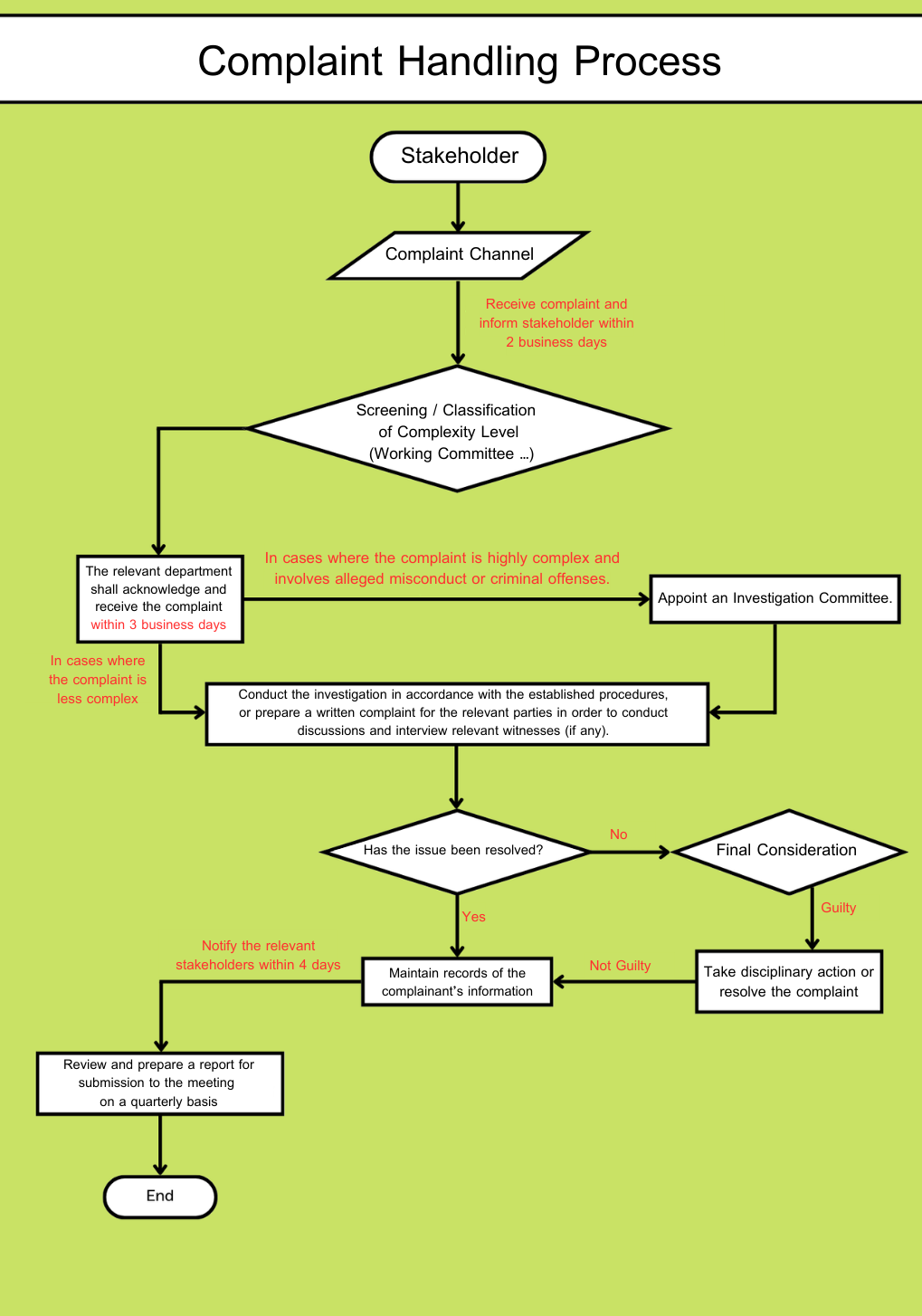
Complaint handling and redress process
Employees — Plan & Guidelines
Introduction
1. Fair employee compensation
2. Employee Training and Development
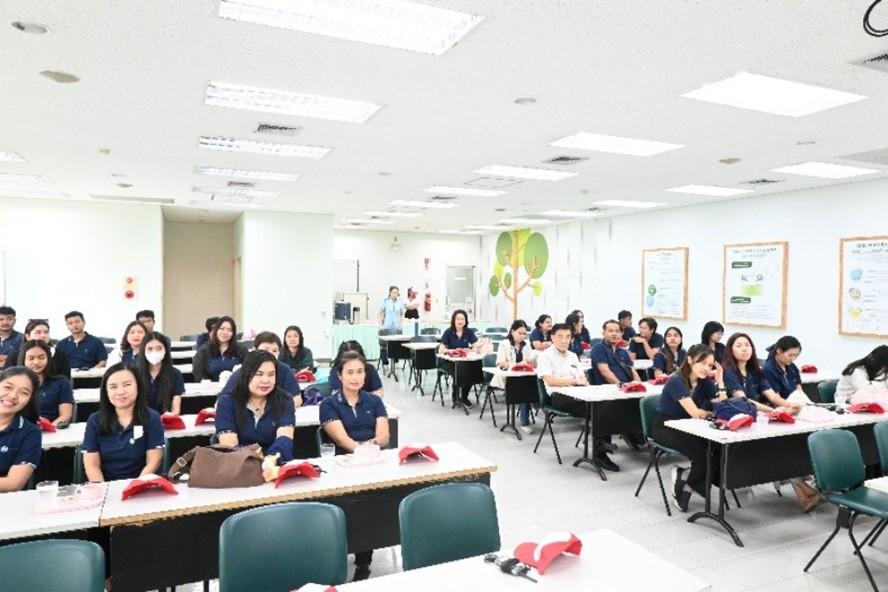
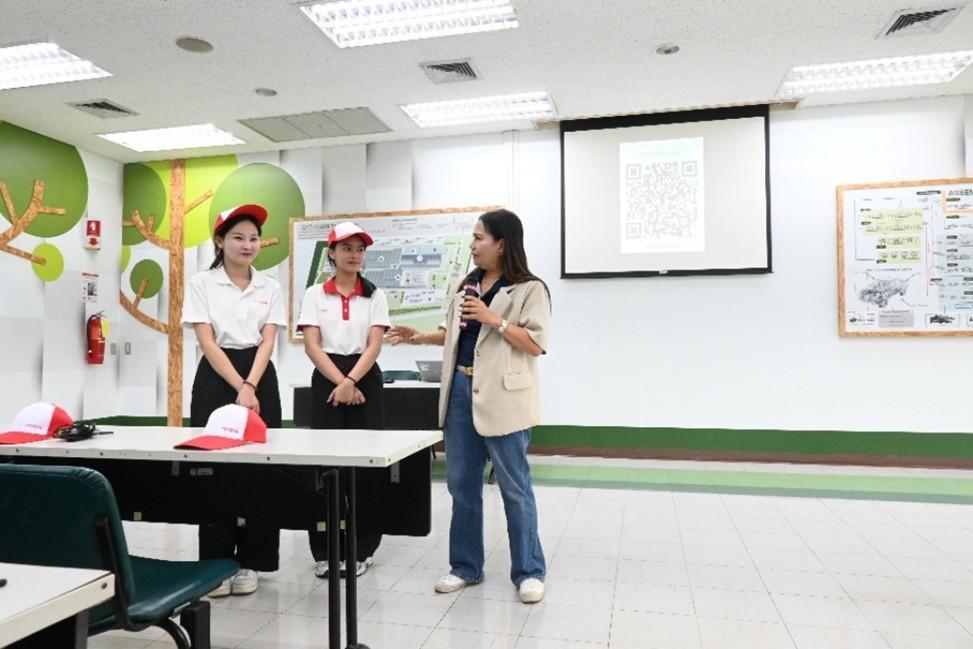
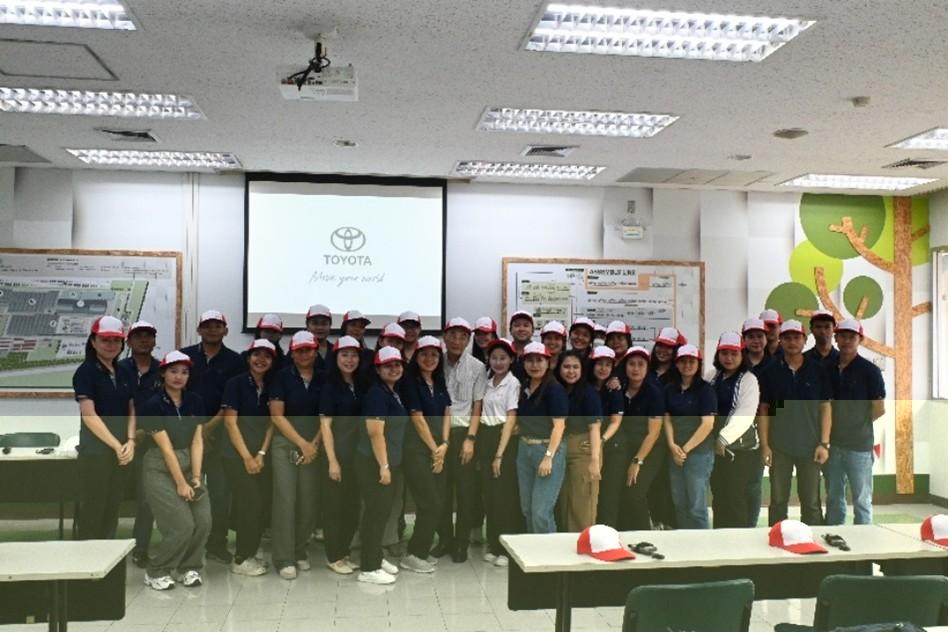
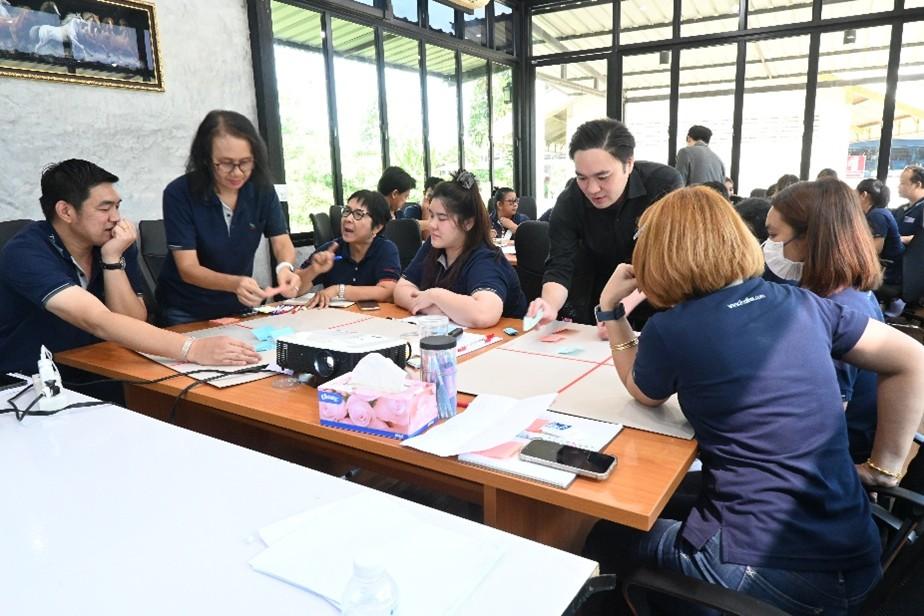
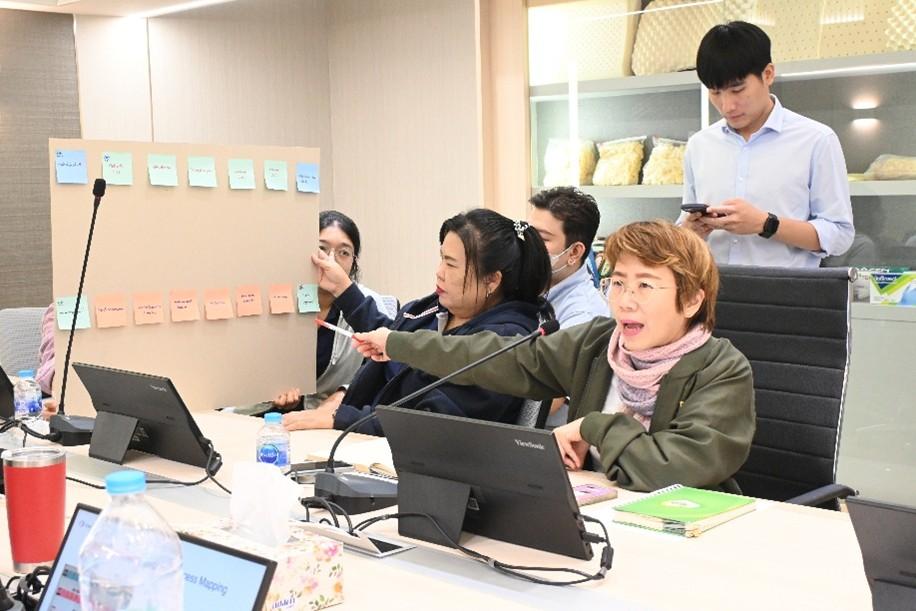
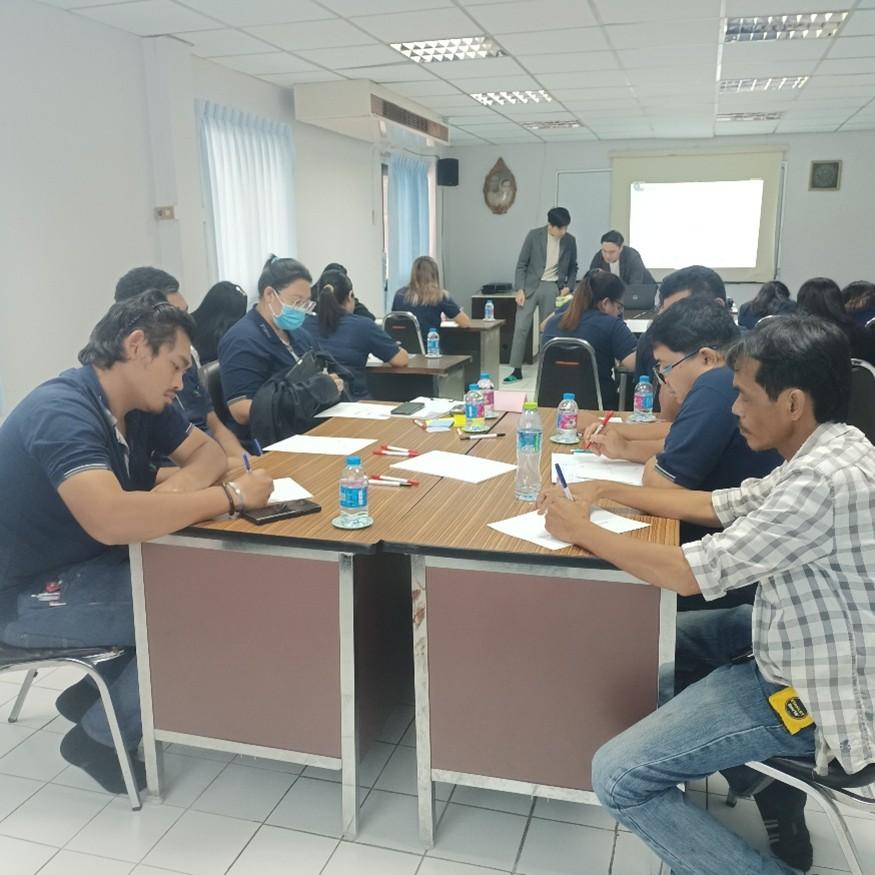
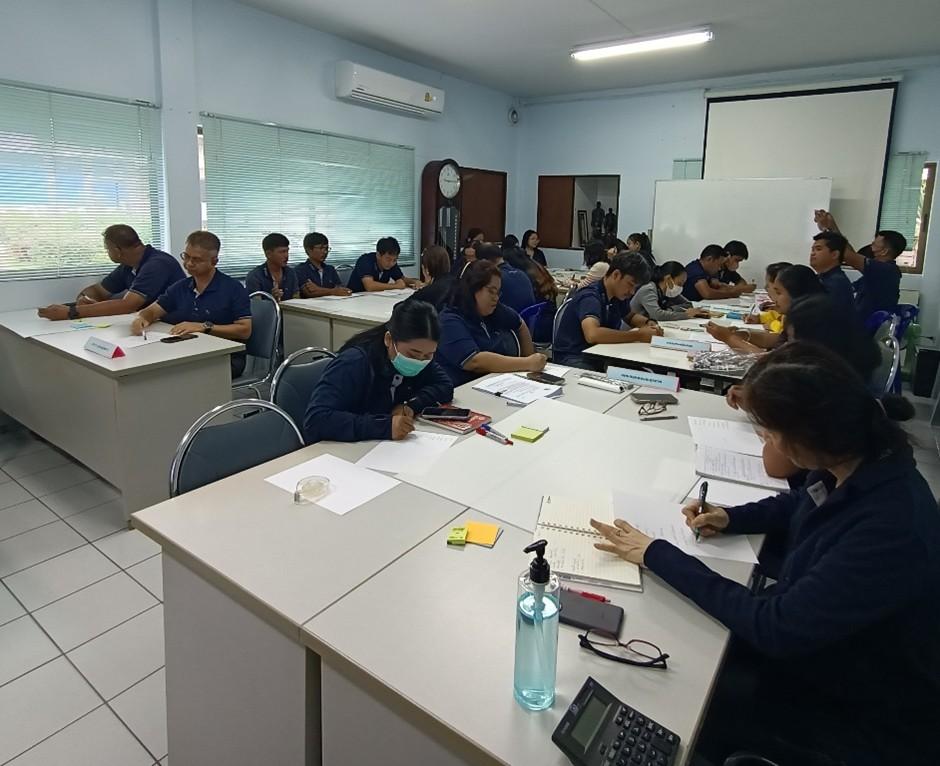
- Activity "Toyota Plant Insight: Lessons from Toyota Towards Sustainable Development," which involved a visit to TOYOTA's actual operational processes at the Toyota car assembly plant in Ban Pho, Chachoengsao Province. This activity was organized to provide personnel with direct experience from the production process, as well as to learn Toyota's excellent management concepts and methods, such as the Toyota Production System (TPS), Kaizen principles, 5S system, and waste reduction in the production process, which are crucial approaches for increasing operational efficiency and reducing costs.
- Project: "Innovative Organizational Development with AI: Stepping Towards an Innovative Organization with the Power of AI" to enhance fundamental understanding of AI: to equip personnel at all levels within the organization with basic knowledge and understanding of artificial intelligence, including its concepts and applications in various business aspects. Develop AI project planning and management skills: to enable managers and IT departments to possess the skills and capabilities to effectively plan, develop, and manage AI projects. Promote the adoption of AI to improve work processes: prepare the organization to utilize AI technology for developing and enhancing work processes to be more efficient and modern. And increase the organization's competitiveness: to be competitive in a rapidly changing market by leveraging AI technology to develop new products and services.
- Supported the development of new skills and specialized knowledge for employees.
- Organized training on human resource management software for HR personnel at both the head office and factories to enhance the efficiency of HR management.
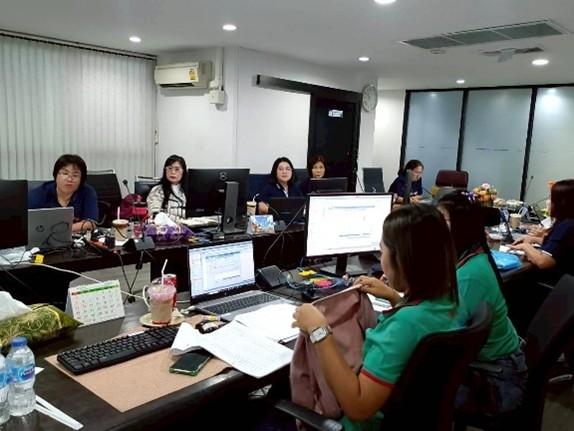
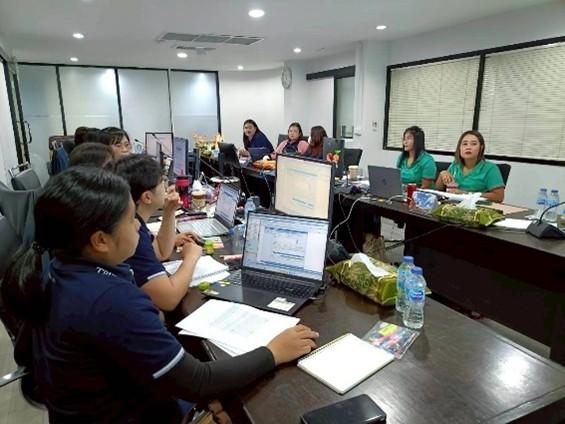
- Organized employee training on risk management and development, which is a crucial component for all departments and divisions. This aims to help the organization reduce the root causes of potential damages arising from policy setting, operations, and corruption, ensuring that the level and magnitude of future damages are assessable, controllable, and systematically verifiable by the organization, while prioritizing the achievement of organizational objectives, goals, and image.
3. Promoting employee relations and engagement
- Organized the "THAITEX Appreciate Colleagues, Collect Points for Happiness" activity to promote the expression of appreciation, work collaboration, mutual support, and recognition of colleagues' achievements through a reward-point system. This project aims to create a positive and happy work environment and stimulate sustainable work motivation, which will be a crucial foundation for driving the organization's stable growth.




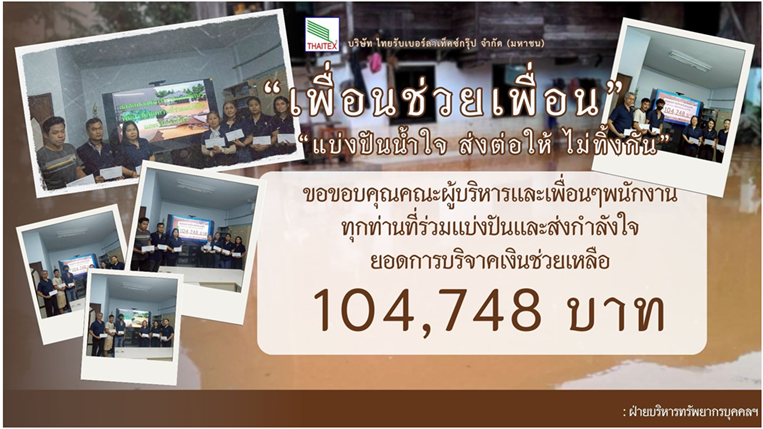
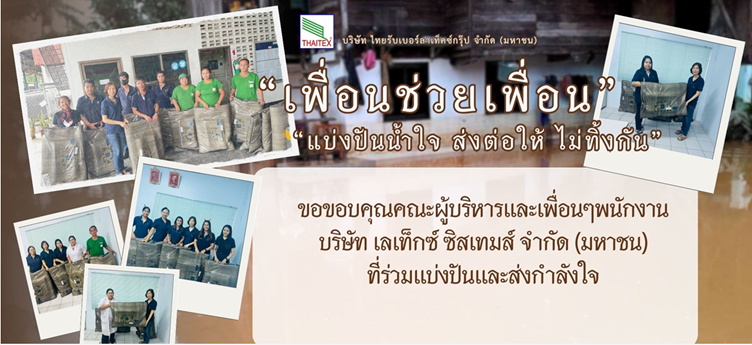
- THAITEX "Sharing Kindness for Disabled Children" activity, THAITEX Mangrove Reforestation, and importantly, as company employees in the Hat Yai factory area were affected by a major flood in 2025, executives and employees from both the head office and other factories collectively donated money and supplies to help alleviate the hardship.
4. Migrant/Foreign Workers
- Developed multilingual media, such as in Burmese and Cambodian, to ensure migrant/foreign workers correctly understand their labor rights, complaint procedures, and company regulations.


5. Child Labor
- Established clear policies to prevent child labor within the organization and consistently monitor or track violations throughout the entire value chain.
6. Occupational Safety and Health
- Implemented a security patrol guideline for security officers, requiring patrols every 3 hours. A checklist is provided to record inspection results for each round. The checklist format utilizes a QR Code system, which has been installed at each checkpoint.
- Provided training to warehouse employees on occupational safety, such as the mandatory wearing of safety equipment before commencing work and proper ergonomic lifting techniques.
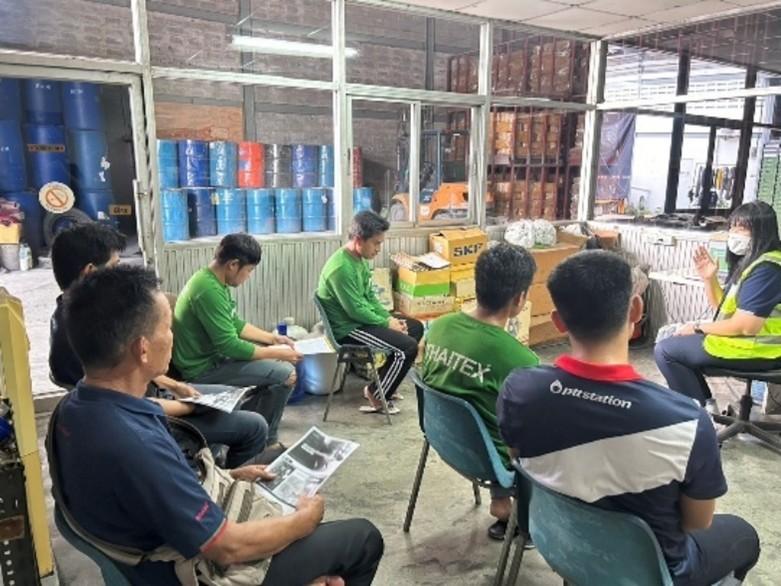
- Organized annual safety and health training or activities for employees at all levels.
- Reduce workplace accidents by setting a target of zero accidents.
Has an Employee Management Plan
Yes
Plan Description
Employees and Labor
Adhere to human rights principles and comply with labor laws and other labor-related laws, from employment to employee and personnel care, to foster a sense of belonging among all employees and personnel as part of the organizational family. In 2025, the company undertook the following significant employee-related operations:
Quality, Environmental, Occupational Health, and Safety Policy
Thai Rubber Latex Group Public Company Limited (TRUBB) operates a business producing concentrated latex and skim block rubber, focusing on manufacturing products and services that meet customer needs and maximize satisfaction for customers and stakeholders. Simultaneously, the company recognizes the importance of environmental impacts arising from its activities, products, and services, as well as potential hazards that could lead to injury or illness among personnel or stakeholders.
The company is committed to continuously establishing, implementing, maintaining, and improving its Quality, Environmental, Occupational Health, and Safety Management System, based on the following commitments:
Committed to complying with relevant laws and obligations
Improve production efficiency and product quality to meet standards.
Prevent pollution and protect against environmental impacts, including preventing injuries and illnesses that may arise from work activities.
Provide support in essential resources to maintain and continuously improve the management system.
Provide training on occupational safety, health, and working environment
The health and safety of employees and workers are among the issues that the company highly prioritizes, as they significantly impact stakeholders, including labor loss, and can affect production volume. Therefore, the company sets strict standards and monitors all operations to ensure occupational health and safety meet international standards.
Employee safety, occupational health, and working environment, as follows:
Total working hours of all employees
- Year 2023: 1,524,240 hours
- Year 2024: 1,511,744 hours
- Year 2025: 1,301,528 hours
Number of work-related injuries or accidents resulting in lost time for employees
- Year 2023: 23 times
- Year 2024: 13 times
- Year 2025: 7 times
Total number of employees who sustained work-related injuries resulting in lost time of 1 day or more
- Year 2023: 17 people
- Year 2024: 13 people
- Year 2025: 7 people
Percentage of employees who sustained work-related injuries resulting in lost time of 1 day or more
- Year 2023: 2.50%
- Year 2024: 2.06%
- Year 2025: 1.23%
Number of employees who died from work-related incidents
- Year 2023: 0 people
- Year 2024: 0 people
- Year 2025: 0 people
Percentage of employees who died from work-related incidents
- Year 2023: 0%
- Year 2024: 0%
- Year 2025: 0%
The company has set occupational health and safety development goals related to employees/workers for the year 2025, with the desired outcome of reducing work-related accidents (accidents resulting in more than 3 days of lost time) to zero.
Annual health check-up
To employees to inform them about their health or work-related impacts, and to provide annual accident statistics or health impacts from work across various issues, such as location, nature of occurrence (vehicles, confined spaces, height, chemicals, electricity, odors/vapors, slippery or uneven surfaces, etc.), type of occurrence (personal error/negligence, incomplete area or equipment, failure to wear protective gear), and severity level.
Provision of personal protective equipment
The company continuously develops and improves the efficiency of its safety operations to reduce the risk of illness, injury, or death, and to appropriately care for the quality of life of employees or workers. The number of work-related fatalities was zero in 2025. Additionally, the company procured PPE sets and equipment such as safety glasses, face shields, rubber gloves, and safety shoes for employees to replace damaged equipment and to supplement areas where it was deemed to help prevent accidents.
Employee Engagement
The company conducts an annual employee satisfaction survey to utilize the collected data for developing improvement plans in subsequent years. The survey covers the following aspects of employee satisfaction:
1. Duties performed
2. Work System
3. Morale and encouragement
4. Incentive System
5. Supervisors
6. Subordinates
7. Workplace Environment
8. Information and Communication
9. Sense of pride in the company
10. Internal cooperation and coordination
11. Company Rules and Regulations
12. Overall satisfaction with working for the company
13. Production Management/Product Quality
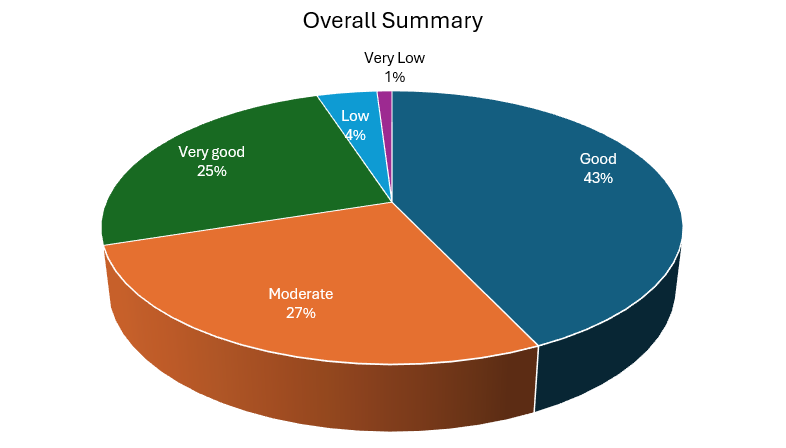
Employee Attitude Survey Project in the Concentrated Latex Group
Summary of Overall Satisfaction Level for Year 2025
Affiliation | Satisfaction Level 2025 (%) | |||||
5 | 4 | 3 | 2 | 1 | Average Satisfaction Score | |
HO | 30.45 | 43.99 | 22.77 | 2.32 | 0.47 | 4.02 |
Factory | 22.33 | 42.15 | 29.68 | 4.57 | 1.27 | 3.80 |
Overall Summary | 25.08 | 42.77 | 27.34 | 3.81 | 1.00 | 3.87 |
Summary of Overall Satisfaction Level for Year 2024
Affiliation | Satisfaction Level 2024 (%) | |||||
5 | 4 | 3 | 2 | 1 | Average Satisfaction Score | |
HO | 28.83 | 41.34 | 24.71 | 4.49 | 0.63 | 3.93 |
Factory | 20.46 | 50.46 | 24.03 | 4.09 | 0.96 | 3.85 |
Overall Summary | 23.25 | 47.43 | 24.26 | 4.22 | 0.85 | 3.88 |
Indicators | Year 2024 | Year 2025 | Changes |
Overall Average Satisfaction | 3.88 | 3.87 | Slight decrease (-0.01) |
% Highest Satisfaction Level (5) | 23.25% | 25.08% | Increased (+1.83%) |
% Low Satisfaction Level (1-2) | 5.07% | 4.81% | Decreased (Improved) |
From the summarized overall satisfaction levels for both years (2024 and 2025), we can compare the satisfaction levels as follows:
Head Office (HO) - Clear improvement in development
Average: Increased from 3.93 to 4.02
Proportion: There is a clear shift from groups that previously scored 2-4 to scoring 5 (level 5 increased from 28.83% to 30.45%).
Summary: Employees in the office showed increased satisfaction across all dimensions.
Factory - There are warning signs to monitor
Average: Decreased from 3.85 to 3.80
Volatility:
The most satisfied group (level 5) increased (20.46% -> 22.33%).
However, the group with low scores (levels 1-2) also increased (5.05% -> 5.84%).
Furthermore, the group with level 3 scores (moderate) increased from 24.03% to 29.68%, while level 4 significantly decreased.
Summary: Satisfaction in the factory is starting to show "polarization" of opinions, with both a group that is highly satisfied increasing and a group that is becoming dissatisfied also increasing.
Conclusion and Recommendations
Strengths:
The organization successfully increased the highest satisfaction level (level 5) overall (from 23.25% to 25.08%), reflecting that certain projects or benefits effectively met the needs of the majority.
Areas for Improvement (Pain Points):
Factory Group: The decreased average score and increased Group 3 scores reflect "hesitation" or uncertainty regarding certain policies. Focus groups should be conducted to determine why the group that previously scored level 4 (good) has now dropped to level 3 (moderate).
Score levels 1-2 in the factory: Although a small percentage, there is an increasing trend (contrary to the Head Office, where it decreased). Attention must be paid to relationships or the working environment at the factory.
Foreign Labor Employment Policy
As Thai Rubber Latex Group Public Company Limited (TRUBB) has established its human rights policy and practices, it has a clear policy not to engage in or support the illegal employment of foreign labor, and to oppose exploitation, abuse of power, or forced labor in any form against the company's employees or workers, including foreign workers.
To ensure that the company's foreign labor management process aligns with and supports the company's human rights and labor policies and practices, as well as complies with international standards, including the Universal Declaration of Human Rights and the UN Guiding Principles on Business and Human Rights. Appropriate management of foreign labor is crucial for conducting business without violating human rights and labor rights within the company's operations.
Objective
The objective of this policy is to ensure that labor recruitment and employment operations maintain professionalism, fairness, and transparency. This policy aims to promote safe migration and reduce the risk of labor exploitation, including the risks of child labor, human trafficking, and to elevate ethical labor recruitment standards. The policy is designed to ensure fairness regarding equitable and appropriate costs between workers and the company throughout the labor recruitment process.
Scope
This policy covers the entire process of recruiting and employing foreign labor for the company, including its subsidiaries. The definition of labor recruitment under this policy is "recruitment and employment when there is a demand for labor."
(1) Engagement of labor recruitment agencies and employment of foreign labor
Foreign workers must be recruited from properly registered and licensed labor recruitment agencies, or be employees who apply directly to Thai Rubber Latex Group Public Company Limited (TRUBB), including its subsidiaries. The company endeavors to recruit labor directly as much as possible without using recruitment agencies.
In the event that Thai Rubber Latex Group Public Company Limited (TRUBB), including its subsidiaries, has an agreement regarding the use of labor recruitment agencies, all labor must be recruited only through the company's authorized channels.
The use of labor recruitment agencies must be approved by the country of origin and comply with the contract until renegotiated or terminated.
Thai Rubber Latex Group Public Company Limited (TRUBB) requires its business partners to comply with the company's business ethics and labor practices, in accordance with national legal standards and international standards across 4 areas: 1) Labor Standards, 2) Health and Safety, 3) Environmental Policy, and 4) Business Ethics. This applies to Thai Rubber Latex Group Public Company Limited (TRUBB) and its subsidiaries.
Operational Procedures
Thai Rubber Latex Group Public Company Limited (TRUBB) or its subsidiaries must inform approved labor recruitment agencies about job descriptions, working conditions, and various compensations, including recruitment expenses to be paid by employees and by TRUBB. The fees paid by TRUBB to the labor recruitment agency must be in accordance with mutually agreed terms.
Labor recruitment agencies will conduct initial screening interviews for applicants based on the screening criteria of Thai Rubber Latex Group Public Company Limited (TRUBB) or its subsidiaries.
Applicants who pass the initial interview complete an application form and undergo skill testing.
Thai Rubber Latex Group Public Company Limited (TRUBB) will conduct the final selection round from applications and a list of candidates who passed the initial interview.
Labor recruitment agencies must ensure that selected employees are informed of the terms and conditions of employment in their primary language (or another language they understand), and that employees understand and voluntarily accept these terms and conditions from the outset of their application. Selected employees must receive and sign an employment contract.
Employees must receive a copy of their employment contract in a language they understand.
Training will be provided for hired employees and will cover employment terms, culture, safety, grievance channels, and labor laws in Thailand. Thai Rubber Latex Group Public Company Limited (TRUBB), including its subsidiaries, will cover all training fees and expenses incurred from the training, excluding travel costs to the training venue.
(2) Labor recruitment service fees
Thai Rubber Latex Group Public Company Limited (TRUBB) adheres to the principle of not collecting labor recruitment service fees from foreign workers. TRUBB and its subsidiaries are responsible for paying labor recruitment fees. The company will terminate services with any labor recruitment agency found to be charging fees or recruitment service fees from employees that violate the law or exceed the scope agreed upon with TRUBB, including its subsidiaries, whether such charges to employees occur directly or indirectly through sub-agents. In such cases, the labor recruitment agency must refund these improper payments to the employees. TRUBB pays the following expenses:
1. All recruitment fees, including
Contract fees or signing ceremony expenses incurred
Certificates and Approved Documents
2. Pre-departure training fees, including accommodation and meal costs during the training.
3. Food and drinking water during travel from the meeting point to the Thai border and to the factory of Thai Rubber Latex Group Public Company Limited (TRUBB) or its subsidiaries.
4. Travel expenses from the Thai border or pre-departure training location to the factory of Thai Rubber Latex Group Public Company Limited (TRUBB).
5. Uniform and safety equipment costs
Employees pay the following expenses:
Legally mandated expenses for foreign nationals, such as health check-up fees, passport fees, work permit fees, 90-day reporting fees to the Immigration Bureau, and visa fees.
Expenses incurred in the country of origin
Expenses
Labor recruitment agencies must disclose all costs and other details when doing business with Thai Rubber Latex Group Public Company Limited (TRUBB) and its subsidiaries to ensure transparency regarding expenses related to documentation and recruitment services.
(3) Compensation and Benefits
The company pays compensation and provides various benefits to all foreign workers at the same job level, according to the same criteria, equally and fairly.
(4) Grievance and Remedy
The company will operate to ensure that foreign workers can safely and effectively file grievances or raise concerns related to the foreign labor employment process under this policy and can access appropriate remedies in a timely and transparent manner if there is non-compliance with this policy and guidelines. Effective from August 14, 2025, onwards.
Plan Areas
| Plan Area |
|---|
| Fair employee compensation |
| Employee training and development |
| Promoting employee relations and participation |
| Migrant/foreign labor |
| Child labor |
| Occupational health and safety in workplace |
Employees — Workforce
Employees with Disabilities — Introduction
In accordance with the Persons with Disabilities' Quality of Life Promotion and Development Act B.E. 2550 (2007), employers with 100 or more employees are required to employ persons with disabilities at a ratio of 1% of the total number of employees. In 2025, the company has a total of 566 employees/year and has employed persons with disabilities as follows:
Employees with disabilities under Section 33* 4 persons
Employees with disabilities under Section 35* 2 persons
Total of 6 persons
Workforce Data
| Metric | Current Year | Previous Year | Two Years Ago | Remark |
|---|---|---|---|---|
| Total number of employees (Persons) | 566 | 632 | 678 | |
| Number of male employees (Persons) | 308 | 360 | 383 | |
| Number of female employees (Persons) | 258 | 272 | 295 | |
| Total employment of disabled persons (people) | 6 | 6 | 6 | Data as of October 2025 |
| Total disabled employees (people) | 4 | 4 | 4 | |
| Total male disabled employees (people) | 3 | 3 | 3 | |
| Total female disabled employees (people) | 1 | 1 | 1 | |
| Total disabled workers who are non-employee (people) | 2 | 2 | 2 | |
| Contributions to the fund for promoting and improving the quality of life for disabled persons | 1 | 1 | 0 | |
| Total number of male employees in operational level (Persons) | 296 | 346 | 366 | Accounts for 96.10% |
| Total number of male employees in management level (Persons) | 6 | 9 | 11 | Accounts for 1.95% |
| Total number of male employees in executive level (Persons) | 6 | 5 | 6 | Accounts for 1.95% |
| Total number of female employees in operational level (Persons) | 249 | 255 | 277 | Accounts for 96.51% |
| Total number of female employees in management level (Persons) | 8 | 16 | 17 | Accounts for 3.10% |
| Total number of female employees in executive level (Persons) | 1 | 1 | 1 | Accounts for 0.39% |
Employees — Remuneration & Provident Fund
Introduction
In 2025, the company allocated employee compensation equally by position, as follows:
Percentage of total compensation for male employees 56.63%
Percentage of total compensation for female employees 43.37%
Average compensation for all employees 321,324.87 Baht/person
Average compensation for male employees 334,363.83 Baht/person
Average compensation for female employees 305,758.97 Baht/person
Remuneration & Provident Fund
| Metric | Current Year | Previous Year | Two Years Ago |
|---|---|---|---|
| Total disabled employees (people) | 181,869,874 | 177,052,240.67 | 233,412,869 |
| Total male employee remuneration (Baht) | 102,984,061 | 101,084,225.3 | 147,501,917 |
| Total female employee remuneration (Baht) | 78,885,813 | 75,968,015.37 | 85,910,952 |
| Number of employees eligible to participate in PVD (persons) | 560 | 615 | 655 |
| Total number of employees joining employee provident fund (Persons) | 187 | 189 | 203 |
| Percentage of total number of employees joining employee provident fund to total number of employees (%) | 33.04 | 29.91 | 29.94 |
| Number of PVD members / Total eligible employees (%) | 33.39 | 30.73 | 30.99 |
| Total amount of provident fund contributed by the Company (Baht) | 3,789,852 | 3,770,387 | 3,891,056 |
| Total amount of provident fund contributed by employee (baht) | 4,949,661 | 3,770,387 | 3,891,056 |
Employees — Training & Development
Introduction
In 2025, the Company organized training courses for employees to enhance their skills and work potential, covering 62.53% of the total workforce, exceeding the target of 50%.
Training Data
| Metric | Current Year | Previous Year | Two Years Ago |
|---|---|---|---|
| Average employee training hours (Hours / Person / Year) | 16.78 | 11.92 | 8.95 |
| Employee development and training expenses (baht) | 525,419 | 420,222.5 | 195,875 |
Employees — Occupational Health & Safety
Occupational Health & Safety Data
| Metric | Current Year | Previous Year | Two Years Ago |
|---|---|---|---|
| Total number of lost time injury incidents by employees (Cases) | 7 | 13 | 23 |
Employees — Labour Relations
Labour Relations Data
| Metric | Current Year | Previous Year | Two Years Ago | Remark |
|---|---|---|---|---|
| Total voluntary resignations (Persons) | 75 | 51 | 130 | |
| Male employees who voluntary resigned (Persons) | 51 | 33 | 89 | Accounts for 68% |
| Female employees who voluntary resigned (Persons) | 24 | 18 | 41 | Accounts for 32% |
| Percentage of employee turnover leaving the Company voluntarily (%) | 13.25 | 8.07 | 19.17 | |
| Evaluation result of employee engagement | 1 | 1 | 1 |
Employees — Employee Representation
Employees Are Represented Collectively
Yes
Forms of Representation
| Form |
|---|
| Welfare committee |
Employees — Targets
Has Set Employee Targets
Yes
Targets
| Indicator | Target Areas | Base Year | Target Year | Target Year — Description |
|---|---|---|---|---|
| - Compensation structure aligned with the labor market and employee skills - Rate of reduction in compensation-related complaints | 2983 · Description: Fair employee compensation | 2,023 | 2,032 | - Compensation structure aligned with the labor market and employee skills, covering 100% of employees at all levels.
- The complaint rate regarding compensation payment is 0 cases. |
| - Average training hours per employee per year - Number of learning programs offered, such as online training or knowledge-sharing activities | 2984 · Description: Employee training and development | 2,023 | 2,032 | - Average training hours per employee: 12 hours/year
- Number of learning programs provided, such as online training or knowledge-sharing activities, covering 100% of employees at all levels. |
| - Employee satisfaction score regarding engagement. - Number of activities promoting internal collaboration. | 2985 · Description: Promoting employee relations and participation | 2,023 | 2,032 | - Average overall employee satisfaction is 4.00.
- Number of activities promoting internal collaboration: 3 main activities per year.
|
| - Number of migrant workers who received training on labor rights and company regulations. - Increased awareness of rights among migrant workers. | 2986 · Description: Migrant/foreign labor | 2,023 | 2,032 | - The proportion of migrant workers who received training or information on labor rights and company regulations was 100%. |
| - Number of detected child labor cases (must be zero) - Rate of inspection and monitoring of child labor rights violations in the value chain. | 2987 · Description: Child labor | 2,023 | 2,032 | - Zero cases of child labor were identified.
- Inspections and monitoring of child labor rights violations in the value chain are conducted with 100% coverage. |
| - Workplace accident rate (decreased) - Rate of complete use of personal protective equipment (PPE) - Number of safety and occupational health training activities provided | 2988 · Description: Safety and occupational health at work | 2,023 | 2,032 | - 100% Personal Protective Equipment (PPE) utilization rate (within operational areas and high-risk activities).
- 100% completion of safety and occupational health training as per legal and regulatory requirements, and organization of 3 activities per year to promote knowledge and awareness of occupational safety. |
Employees — Performance & Outcomes
Has Performance Results
No
Customers — Plan & Guidelines
Has a Customer Management Plan
Yes
Plan Description
Creating customer satisfaction with products and services is a crucial factor impacting the Company's performance, especially in the current market situation where volatility persists due to an imbalance between market supply and demand, coupled with increasing trade regulations and rising trade competition. This could lead to the Company losing its ability to retain its core customer base. Therefore, the Company focuses on closely building customer satisfaction with products and services, while also developing products and services, as well as various company standards, to meet customer needs and align with circular economy principles, reducing pollution and greenhouse gas emissions throughout the product lifecycle, including trade regulations. This enables the Company to appropriately adjust its sales plans and retain existing customers while expanding its new customer base.
For this reason, the Company conducts annual customer satisfaction surveys to improve operations. These surveys cover three aspects: satisfaction with product quality, company personnel service, product delivery process, and complaint issues, all of which are used for improvement to achieve operational goals.
Objective
To achieve maximum customer satisfaction and build continuous customer relationships.
Methods for Conducting Opinion Surveys to Develop Customer Relationships
Plan operations to continuously build customer satisfaction.
Conduct annual customer satisfaction surveys.
Once customer feedback is received, the Company will use the data to measure and evaluate customer satisfaction to identify strengths and weaknesses in operations.
The Company will use these issues to develop and improve operations to achieve the annual targets.
Customer Relationship Development Guidelines
1. Product Quality
1.1 The factory produces goods in accordance with company and customer specifications.
1.2 Regularly review customer requirements to make necessary adjustments and meet customer needs.
1.3 Implement quality control procedures for products in accordance with specifications before every customer delivery.
1.4 Continuously improve and develop new products to meet customer needs, carried out by the Research and Development (R&D) team.
2. Company Personnel Service and Quality
Service is the most crucial factor affecting service quality, as service providers directly interact with service recipients. Therefore, it is important to manage personnel to possess suitable characteristics for service provision, as follows:
2.1 Personality: Dress neatly, be polite and courteous, and show respect to customers.
2.2 Organize staff training to enhance knowledge of product quality and sales techniques to advance employee skills.
2.3 Regularly provide customers with market information, rubber situation, and prices.
2.4 Provide initial technical consultation regarding product usage in case customers encounter problems.
2.5 Experts are available to provide advice and resolve usage-related issues.
3. Product Delivery Process
3.1 Train delivery staff to dress neatly and speak politely to customers.
3.2 Confirm the product delivery schedule with the customer before dispatching goods.
3.3 Verify products and documents for accuracy before delivery.
3.4 Deliver products on time.
3.5 Schedule work and prepare transport vehicles.
3.6 Prepare sufficient transport vehicles for each delivery round.
4. Complaint Management
4.1 Upon receiving a customer complaint, the Marketing and Sales Department reviews the issue.
4.2 Process customer complaint forms, specifying various details.
4.3 Send customer complaint forms to relevant departments to investigate the cause of the problem, including preventing recurrence, and specify this in the customer complaint form.
4.4 Relevant departments return customer complaint forms to the Marketing and Sales Department for completion within 5 working days.
4.5 The Marketing and Sales Department immediately informs the customer of the resolution.
Customer Complaints
There were a total of 3 customer complaints in 2025.
Complaints | Quality Issues | Problem Resolution Process |
1 | Mold on SKIM BLOCK rubber. | The problem has been resolved, and preventive measures have been identified. |
2 | MST value below customer-specified standard. | The problem has been resolved, and preventive measures have been identified. |
3 | DRC value below customer-specified standard. | The problem has been resolved, and preventive measures have been identified. |
The Company has set the following customer relationship/satisfaction development targets for 2026:
- Customer satisfaction survey results for domestic and international customers not less than 80% and 90%, respectively.
- No quality complaints from domestic and international customers.
Plan Areas
| Plan Area |
|---|
| Development of customer satisfaction and customer relationship |
Customers — Satisfaction Results
Customer Satisfaction Results
| Metric | Current Year | Previous Year | Two Years Ago |
|---|---|---|---|
| Evaluation results of customer satisfaction | 1 | 1 | 1 |
Customers — Targets
Has Set Customer Targets
Yes
Targets
| Indicator | Target Areas | Target Year | Target Year — Description |
|---|---|---|---|
| Customer Satisfaction in 2025 - Domestic Customers 80% - International Customers 90% | 3009 · Description: Development of customer satisfaction and customer relationship | 2,025 | - Achieve customer satisfaction by 2025 according to the defined indicators, as follows:
- Domestic customers: 80%
- International customers: 90% |
Customers — Performance & Outcomes
Has Performance Results
Yes
Performance Description
Summary of the 2025 Annual Satisfaction Survey
- In 2025, customers cooperated in responding to the survey at a rate of 90.90 percent for domestic customers and 50.00 percent for international customers. These rates are reliable and the data can be used for further operational improvements.
- Domestic customer satisfaction in 2025 was 91 percent, exceeding the target of 80 percent. Customers were satisfied with product quality (Product Quality), sales staff service (Sale Service) regarding the attentiveness, assistance, and problem-solving by sales staff, and delivery processes (Delivery Services).
- International customer satisfaction in 2025 was 90 percent, in line with the target of 90 percent. Customers were satisfied with product quality (Product Quality), sales staff service (Sale Service), and logistics processes (Logistics).
Community & Social — Plan & Guidelines
Has a Community & Social Plan
Yes
Plan Description
Community Survey Project: The Company has planned to conduct community surveys in the field annually, starting from 2023 onwards.
EUDR Traceability Project: Surveying rubber farmer areas and publicizing the EUDR rubber operational plan to establish agricultural standards and enhance trade, thereby increasing trade opportunities for the community.
Thai Rubber for Poverty Alleviation, Happy Society, and Bright Environment Project: Focusing on creating sustainable benefits for the community.
CSR Project: Supporting regular sub-district/district/provincial activities by providing personnel/resources/and equipment for various activities within the communities surrounding the factory annually.
Plan Areas
| Plan Area |
|---|
| Employment and professional skill development |
| Education |
| Religion and culture |
| Forests and natural resources |
| Sports and recreation |
| Occupational health, safety, health, and quality of life |
| Disadvantaged and vulnerable groups |
| Reducing inequality and promoting social equality |
Community & Social — Targets
Has Set Community & Social Targets
Yes
Targets
| Indicator | Target Areas | Base Year | Base Year — Description | Target Year | Target Year — Description |
|---|---|---|---|---|---|
| - Level of impact from the company's operations on the community over the past year - Number of complaints from the community | 3036 · Description: Employment and professional skill development · 3037 · Description: Education · 3038 · Description: Religion and culture · 3039 · Description: Forests and natural resources · 3040 · Description: Sports and recreation · 3041 · Description: Occupational health, safety, health, and quality of life · 3042 · Description: Disadvantaged and vulnerable groups | 2,023 | - The community is not affected by the company's operations in terms of both environmental and social aspects.
- Fewer than 3 complaints from the community. | 2,030 | - The community is not affected by the company's operations, both environmentally and socially.
- There are no complaints from the community. |
Community & Social — Performance & Outcomes
Has Performance Results
Yes
Performance Description
Community Survey Project: Operational Results. The survey of impacts, concerns, expectations, and additional suggestions from communities surrounding 5 factories in 2025 revealed that there were no harmful impacts on health.
EUDR Traceability Project: Operational Results. The company has monitored the accuracy and completeness of deforestation-free data and has engaged with farmer communities to explain the regulations and necessary actions across all sectors, in order to prepare Thai rubber for export to the European Union.
CSR Project: Operational Results. In the past year 2025, the company carried out CSR activities, providing budget, equipment, and personnel for various festive events at the sub-district/district/provincial levels, totaling 45 projects. These were divided into: Head Office 7 projects, Chiang Rai Factory 2 projects, Rayong Factory 3 projects, Surat Thani Factory 16 projects, and Hat Yai Factory 17 projects. Examples include: collecting essential items and delivering them to foundations for disabled children; the "Love the Earth" mangrove reforestation project for sustainability; the "San Khong Ngam Village Route Vision Adjustment" project, providing financial and equipment/machinery support to the community; the "Together We Help Big Cleaning" project after floods; the flood relief donation project; the "Walk, Run, Cycle for the Mother of the Land Fund, Ban Rai Marathon" project; the groundwater bank activity project; the project to donate 15 sacks of Chang cement for villagers' access roads; the project to support and participate in road accident prevention during the New Year festival 2025; and the workshop project to raise awareness of the traceability process for rubber products throughout the supply chain, ensuring compliance with the European Union Deforestation-Free Regulation (EUDR), among others.
Law Violation Incidents
Law Violation Incidents
| Metric | Current Year | Previous Year | Two Years Ago |
|---|---|---|---|
| The total number of cases or incidents of significant violations of laws or regulations regarding social and human rights (Cases) | 0 | 0 | 0 |
| The total number of cases or incidents that cause significant labor disputes (Cases) | 0 | 0 | 0 |
| The total number of cases or complaints related to consumer rights violations (Cases) | 0 | 0 | 0 |
| The total number of cases or complaints related to partner rights violations (Cases) | 0 | 0 | 0 |
| The total number of cases or incidents that cause disputes with the community/society (Cases) | 0 | 0 | 0 |
| The total number of cases or incidents related to cyber security or customer data breaches (Cases) | 0 | 0 | 0 |
| The total number of cases or incidents related to safety and occupational health at work (Cases) | 0 | 0 | 0 |